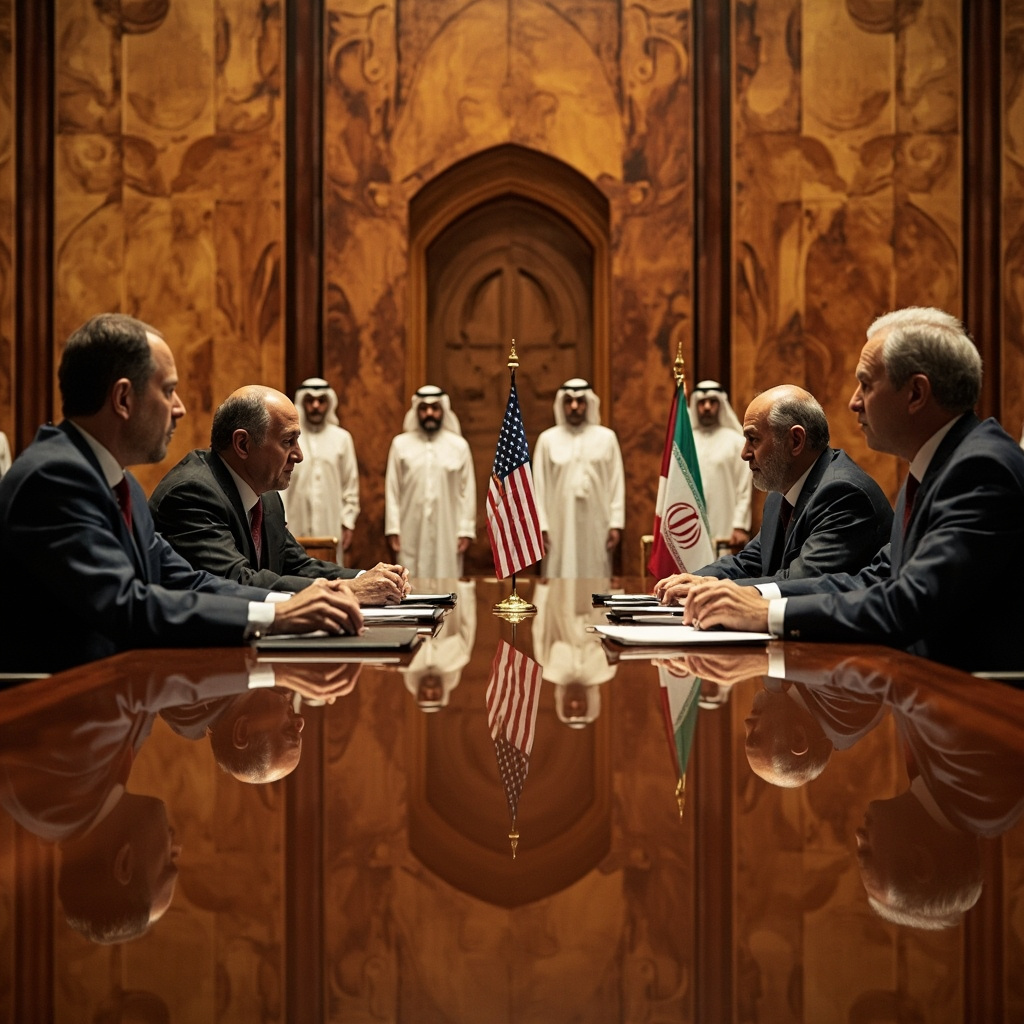
President Donald Trump announced on Monday that American and Iranian officials would meet in Doha on Tuesday, just hours after Tehran flatly denied that any such talks were planned, the latest in a series of contradictions that have left the United States and Iran careening between military confrontation and diplomatic outreach.
Trump Announces, Iran Denies
“IRAN HAS REQUESTED A MEETING. IT WILL TAKE PLACE TOMORROW IN DOHA!” Trump wrote in a social media post on Monday. Within hours, Iran’s Foreign Ministry spokesman Esmaeil Baghaei pushed back, saying that technical talks on the memorandum of understanding between Washington and Tehran “are not planned” for this week, and that Iranian officials would not sit across the table from their American counterparts in Doha.
“We will not have any negotiation meetings at any level with the American side in the coming days, and the fact that the US representatives are traveling to Qatar has nothing to do with the visit of the Iranian delegation,” Baghaei said, according to Iranian state media.
The contradictory public statements arrived against a backdrop of mounting military tension that began when a commercial vessel was struck by a suspected Iranian drone in the Strait of Hormuz. The attack triggered US retaliatory strikes against Iranian military targets along the country’s southern coast, followed by Iranian missile and drone barrages at US installations in Bahrain and Kuwait. Both sides have since agreed to a temporary stand-down, but the Hormuz waterway — through which roughly a fifth of the world’s oil passes — remains the central flashpoint.
A Fragile Memorandum, and a 60-Day Roadmap
The diplomatic chaos obscures a more structured process that preceded it. Washington and Tehran signed a memorandum of understanding earlier this month, mediated by Qatar with Pakistani involvement, that established a 60-day roadmap for reducing hostilities and addressing Iran’s nuclear programme, regional security concerns and the sanctions that have crippled its economy. A key provision dealt with shipping through the Strait of Hormuz, which Iran temporarily disrupted following a first round of US strikes late last week.
On the ground, there are signs that the stand-down is holding. According to MarineTraffic data, 25 commercial vessels transited the Strait of Hormuz over the past 24 hours — six oil tankers outbound and five inbound, alongside cargo ships in both directions. That figure remains well below pre-conflict levels, shipping analysts say, but it marks a cautious resumption of commercial traffic after days of near paralysis that drove global oil prices sharply higher.
Pakistan’s Prime Minister Shehbaz Sharif said Monday that his country had emerged as a “peacemaker” following its role in facilitating the memorandum. Iranian Foreign Minister Abbas Araghchi separately thanked Pakistan for helping secure the return of 22 Iranian crew members aboard the Lenore, a vessel seized during the US blockade of the strait. Flights between Tehran and Dubai are set to resume on Monday, according to regional aviation officials, another indicator of incremental normalisation.
What Comes Next
The US delegation arriving in Doha will be led by special envoy Steve Witkoff and Jared Kushner, Trump’s son-in-law, who has continued to serve as an informal diplomatic envoy even after leaving the White House. The official Iranian delegation will be present in Qatar, but Iranian officials insist they are there solely to follow up on implementation of the existing memorandum — not to negotiate directly with American counterparts.
That distinction matters enormously. The memorandum of understanding halted the immediate exchange of strikes but settled none of the underlying disputes between Washington and Tehran. Iran’s ballistic missile programme, its support for armed proxies across the Middle East, the scope of sanctions relief, and the ultimate status of the Strait of Hormuz all remain unresolved. Talks in Doha this week are expected to focus narrowly on implementing the maritime provisions of the 60-day roadmap, with both sides holding their positions on the broader questions.
Markets will be watching closely. Oil prices have climbed since the Hormuz disruptions began, and any breakdown in this week’s talks would likely push them higher still. Regional allies — Saudi Arabia, the UAE, Israel, and the Gulf states that Iran struck last week — are monitoring every signal from both capitals. The stand-down holds for now. Whether the diplomacy that follows it can survive the contradictions at its core is the open question hanging over the Gulf this week.