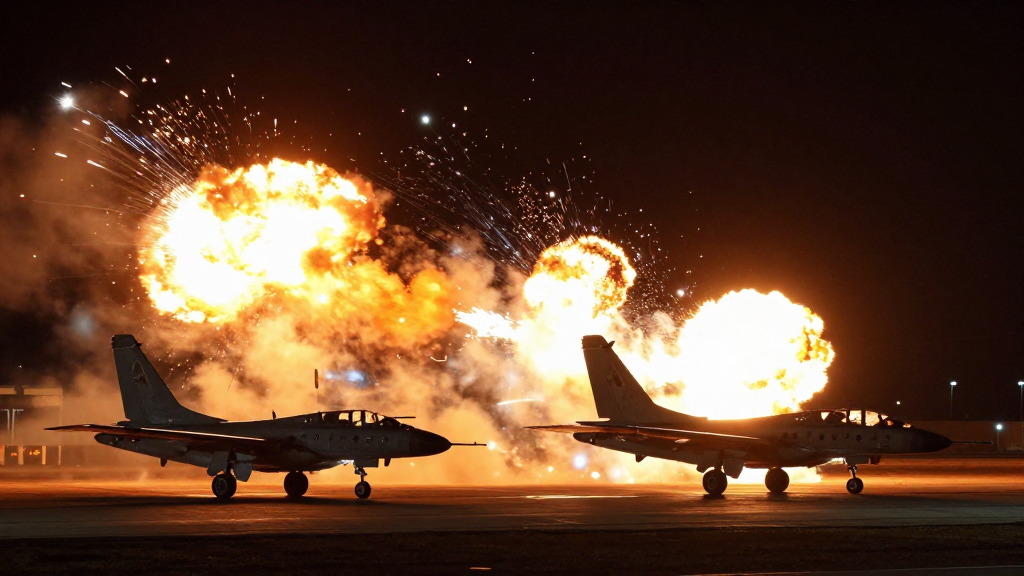
ANKARA, Turkey — The United States launched an expanded wave of military strikes against Iran on Thursday, striking more than 80 targets across the country and hitting Iranshahr Airport in the southeastern Sistan and Baluchestan province, according to the US Central Command and Iranian state media. The strikes came hours after President Donald Trump declared the US-Iran Memorandum of Understanding “over,” marking the formal end of a fragile interim ceasefire that had held since June 17.
CENTCOM confirmed in a statement on X that US forces “completed an additional round of strikes against Iran to further degrade Iran’s ability to attack commercial shipping and innocent civilian mariners in the Strait of Hormuz.” The command said the strikes targeted more than 60 Islamic Revolutionary Guard Corps small boats and dozens of additional military sites. Iranian state news agency IRNA reported explosions in the cities of Bandar Abbas, Sirik, Konarak, Chabahar and Iranshahr, with air defenses activated in southern Iran.
Trump shared a post on Truth Social republishing an X account’s claim that US strikes “indeed targeted Iranshahr Airport in the southeastern Iranian city of Iranshahr,” adding that the airport is “partially utilized by Iran’s Islamic Revolutionary Guard Corps Aerospace Force.” Iranian state media, citing the governor of Iranshahr and the deputy governor of Sistan and Baluchestan province, said one firefighter was killed and the airport’s flight operations building and meteorological station were damaged. The reports have not been independently verified.
A US official told The Jerusalem Post that the strikes on Thursday were greater in number and scope than those carried out the previous night. “Everything depends on Iran’s response,” the official said. “If they continue firing, what happened last night could become a daily or even weekly occurrence. We are prepared.”
Bagher Ghalibaf, Iran’s chief negotiator and Parliament Speaker, said the Strait of Hormuz will reopen only under what he described as “Iranian arrangements,” signaling that Tehran intends to retain significant control over commercial shipping despite mounting international pressure. His remarks came as the semi-official Nour News agency reported that Iranian armed forces are preparing to launch a “massive attack” on US army bases in the region.
Diplomatic Talks Collapse as Military Campaign Widens
The strikes represent a significant widening of the US military campaign against Iran. Iranian state media reported that strikes targeted a maritime traffic control tower and depot in the port city of Chabahar, according to the IRGC-run Fars News Agency. IRNA also said shrapnel from the attacks struck a hospital and power lines in Chabahar. Local Iranian news reported that strikes on Bushehr did not damage the nuclear power plant there.
Trump described the attacks as “in retribution for yesterday’s bombing of ships by Iran,” posting on Truth Social that the targeting of port cities was deliberate. “If it happens again, it will get much worse!” he wrote in a subsequent post, adding a question as to whether Tehran is “worthy of making a deal.” The White House simultaneously revoked a waiver allowing Tehran to sell oil under the June 17 interim peace agreement and reimposed sanctions on Iranian oil exports.
Iran’s foreign ministry condemned the strikes as a violation of the Memorandum of Understanding, saying they undermined key elements of the agreement and accused Washington of military aggression. The escalation came as Iran held funeral events for late supreme leader Ali Khamenei, whose coffin was taken to the Iraqi city of Najaf for a funeral procession before burial in Mashhad.
NATO Summit in Ankara Provides Backdrop for Regional Crisis
The military escalation unfolded as NATO leaders convened in Ankara for a summit that had been expected to focus on the eastern flank and alliance cohesion. Instead, the US-Iran crisis dominated the agenda. Trump discussed Hormuz security with NATO Secretary General Mark Rutte and other alliance leaders on the sidelines of the summit, according to officials briefed on the meetings. Secretary of State Marco Rubio and National Security Advisor Michael Waltz were present alongside the president.
Gulf Arab states have watched the Hormuz standoff with mounting concern. The Strait of Hormuz handles roughly a fifth of the world’s oil supply, and any prolonged disruption carries significant implications for global energy markets. The US official who spoke to The Jerusalem Post on background said Washington was coordinating with Gulf partners on maritime security but acknowledged that a prolonged campaign risked further destabilizing the region.
Israel’s public broadcaster KAN News reported that the United States notified Israeli officials ahead of the attack on Iran. Israeli officials have declined to comment publicly on whether they would become directly involved in the escalating exchange.
What Comes Next
Analysts say the critical variable is Iran’s military response. If Tehran follows through on threats of retaliatory strikes against US bases in the region, the cycle of escalation could accelerate rapidly. The Nour News report of a planned “massive attack” has not been independently confirmed, but officials in Washington said they were monitoring Iranian military communications closely.
Diplomatic channels appear largely dormant. The Trump administration has signaled it will not return to nuclear negotiations under current conditions, and Iranian officials have insisted any new agreement must recognize Iran’s regional security role. Whether a ceasefire can be reinstated — and on what terms — is expected to dominate discussions among US allies and partners in the coming days. Oil markets will remain on edge as long as Hormuz remains contested.