25 States Sue Trump Administration Over Medicaid Work Requirements, Allege Illegal Narrowing of Medical Exemptions
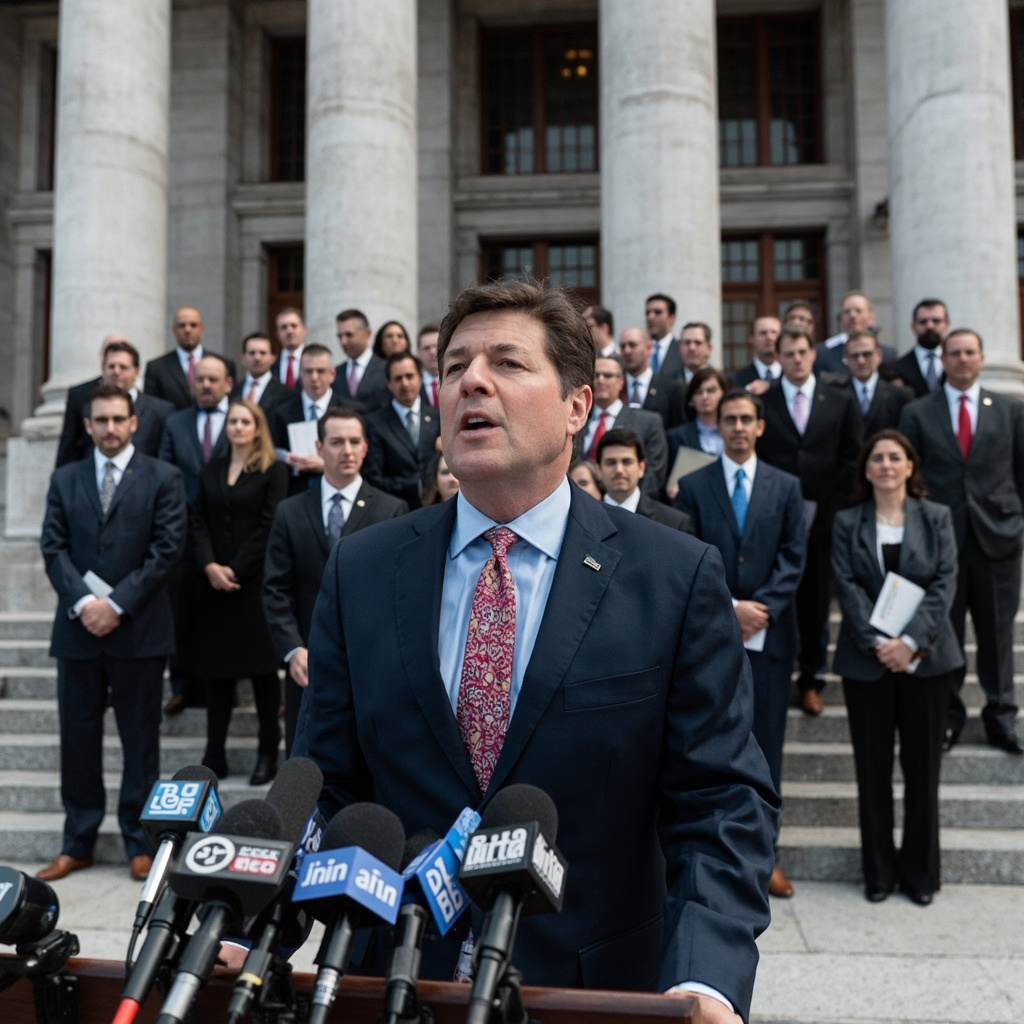
A coalition of 25 states and the District of Columbia filed suit Monday in Boston federal court to block a Trump administration rule imposing new work requirements on Medicaid recipients, arguing the regulation unlawfully restricts exemptions for people with serious medical conditions and was crafted in violation of federal administrative procedure.
The lawsuit targets a rule issued earlier this month by the Centers for Medicare and Medicaid Services implementing work mandates embedded in the Republican-passed “One Big Beautiful Bill Act.” Under the statute, adults aged 19 to 64 must complete a minimum of 80 hours per month of work, community engagement, or half-time education to maintain coverage — with limited exceptions.
Medically Frail Exemption at Center of Legal Fight
At the core of the states case is the contention that Congress provided broad exemptions from the work requirements for individuals who are “medically frail or otherwise have special medical needs.” The states allege CMS interim rule improperly narrowed those protections by requiring people with significant health conditions to prove their condition “significantly impairs” their ability to work — a standard the lawsuit says goes beyond what Congress intended.
“The Trump administration attempt to impose new, burdensome requirements on Medicaid recipients threatens access to healthcare for our most vulnerable residents and families,” Massachusetts Attorney General Andrea Joy Campbell said in a statement announcing the filing.
The states argue the CMS rule violates the Administrative Procedure Act, improperly narrows congressionally mandated exemptions, and imposes conditions on federal spending in a manner that runs afoul of the U.S. Constitution. While the work requirement does not take effect until January 1, states are required to notify Medicaid recipients of the changes by August 31 — a timeline the lawsuit says provides insufficient time to adjust implementation plans.
RFK Jr. and Oz Face First Major Healthcare Lawsuit
The suit represents the first significant legal challenge to the healthcare agenda of HHS Secretary Robert F. Kennedy Jr. and CMS Administrator Dr. Mehmet Oz, both central figures in the Trump administration effort to reshape federal health programs. The lawsuit does not directly name either official, instead targeting CMS as an agency. CMS did not respond to requests for comment.
Medicaid, the joint federal-state health insurance program for low-income Americans, currently covers more than 80 million people. Legal observers say the breadth of the plaintiff coalition — representing more than half of all U.S. states — signals the high stakes of the litigation for the program future.
Federal courts have historically shown deference to agency rulemaking in healthcare cases, but a growing number of judges have shown skepticism toward administrative interpretations that diverge sharply from statutory language. Legal experts say the states constitutional and administrative procedure arguments give them meaningful footing in the case, which is expected to move on an expedited schedule given the January 1 effective date.
A Historic Coalition Against a Historic Medicaid Overhaul
The 25-state coalition behind the lawsuit is among the broadest bipartisan legal coalitions assembled against a federal health policy in recent memory. States like Kentucky and Ohio, which had previously experimented with their own Medicaid work requirements under earlier waiver programs, are now among the plaintiffs — a sign of how broadly the new federal rule has alarmed state officials across the political spectrum.
Work requirements for Medicaid have a contentious history in the courts. A 2019 effort by the Trump administration to impose similar mandates was struck down by the D.C. Circuit Court of Appeals, which ruled that the CMS had exceeded its authority. The current lawsuit builds on those precedents while arguing that the narrower exemption language in the One Big Beautiful Bill Act makes the legal vulnerability even more acute than it was in 2019.
Republicans who passed the bill have defended the work requirements as a pathway to economic self-sufficiency and a necessary measure to slow the growth of entitlement spending. Supporters say the January 1 effective date gives states adequate time to prepare, and that the medically frail exemptions are broad enough to protect those who genuinely cannot work. The outcome of this case will shape the scope of presidential power over federal healthcare programs for years to come, and is expected to ultimately reach the Supreme Court.