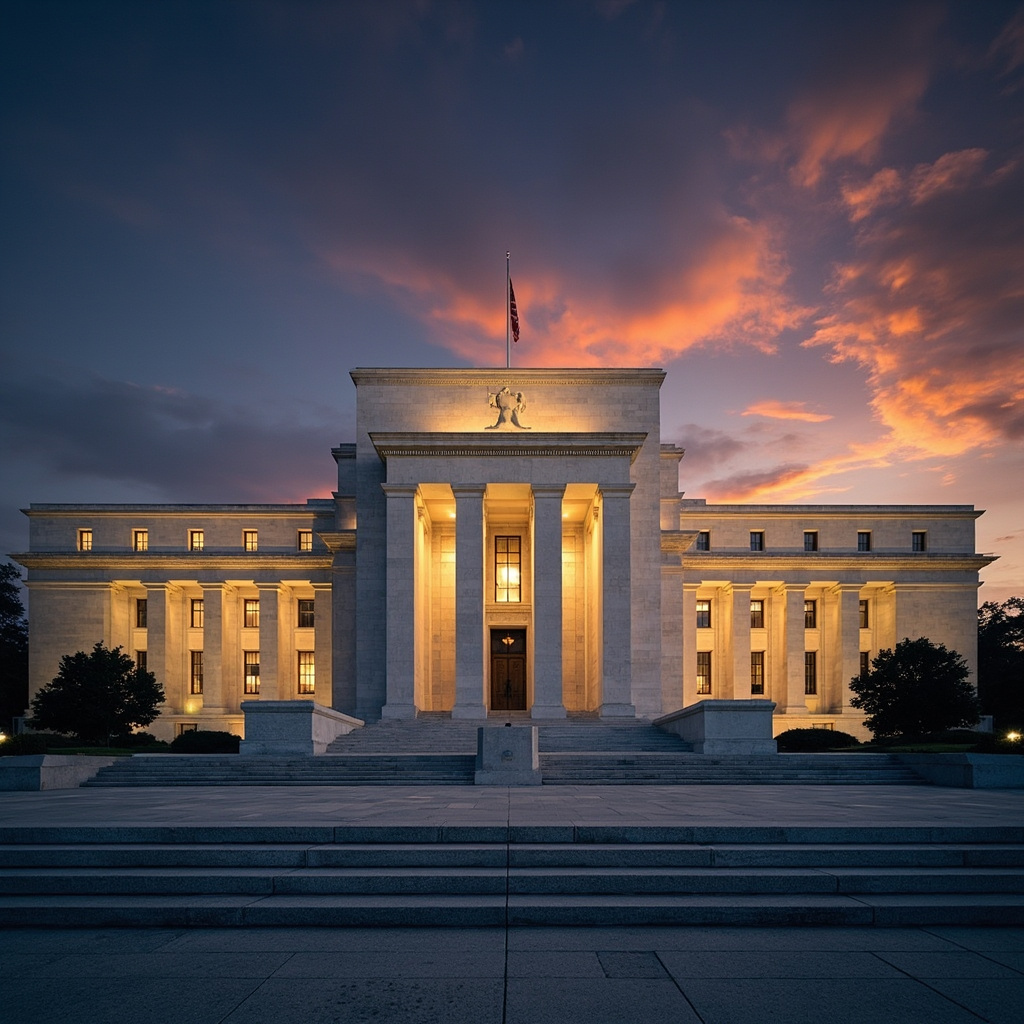
The Federal Reserve left interest rates unchanged on Wednesday in Kevin Warsh’s first meeting as chairman, voting unanimously to keep the benchmark overnight borrowing rate anchored in a range of 3.5% to 3.75%, while the closely watched “dot plot” grid erased all prior indications for a rate cut this year and signaled that a hike is very much on the table. The outcome surprised markets that had priced in a modest chance of an easing move before year-end, and it underscored the degree to which Warsh is willing to depart from the communication framework established under his predecessor.
Warsh, who took over as Fed chairman this year, declined to submit his own forecast to the Summary of Economic Projections and said he would form task forces to overhaul major Fed operations, including the forecasting tools themselves. The central bank’s statement was dramatically shortened to just 130 words, down from 341 in April, and dropped all language indicating a bias toward future rate cuts. The shift marks a philosophical pivot at the institution that markets have relied upon for steady forward guidance for more than a decade.
Statement Stripped of Forward Guidance Language
In a notable departure from his predecessors, Warsh has criticized the Fed for overcommunicating, and Wednesday’s statement reflected that philosophy. “It’s a bit shorter, a bit simpler and it dispenses with some older language,” Warsh said at his post-meeting news conference. “That statement just gives you the facts, as best we can judge it.” The statement offered a brief summary of economic conditions followed by a vow to control inflation, with no hints about the timing of future moves.
The prior statement had included forward guidance verbiage that drew three dissents at the April meeting from regional Fed presidents who wanted to preserve a two-sided option for possible hikes or cuts. That language is now gone entirely. The statement noted that the Fed would maintain its policy of “ape reserves” in the banking system, indicating no immediate plans to reduce the central bank’s .7 trillion balance sheet, an issue Warsh has championed. Analysts noted that the trimmed statement was unprecedented in modern Fed history and reflects a belief that less explicit guidance gives the committee more flexibility to respond to incoming data without being cornered by prior commitments.
Dot Plot Eliminates Cut Expectations, Opens Door to Hike
Based on 18 of 19 possible responses, the median estimate for the fed funds rate at the end of 2026 is now 3.8%, up from 3.4% in the prior March projections, signaling the committee sees at least one rate hike as necessary this year. Meeting participants were split on the path for rates, with eight expecting no change, one seeing a cut, and nine anticipating at least one hike before year-end. The hawkish tilt in the dot plot caught many Fed watchers off guard, as the prior round of projections had pointed toward a gradual normalization of policy.
The grid indicated a median funds rate projection of 3.8% by year-end, some 0.16 percentage point above current levels, pushing any rate reductions into 2027 and 2028 as policymakers weigh the durability of an inflation spike brought on in part by supply shocks stemming from the conflict in the Middle East. The long-run funds rate projection held steady at 3.1%. Economists pointed to the Middle East conflict as a key factor driving the shift in sentiment, with oil supply concerns lifting gasoline prices and adding pass-through pressure to broader consumer costs.
Inflation Forecast Raised Significantly
Officials also raised their inflation outlook sharply. The median projection for headline inflation in 2026 now stands at 3.6%, up from 2.7% in March, while the core projection excluding food and energy was lifted to 3.3% from 2.7%. The committee slightly lowered its gross domestic product growth forecast to 2.2%, down 0.2 percentage point from March, and trimmed the unemployment projection to 4.3%. The sharp upward revision in the inflation forecast reflects the committee’s assessment that energy price shocks from the regional conflict may prove more persistent than initially assumed.
Recent inflation indicators have posted multi-year highs. The consumer price index for May registered a 4.2% annual inflation rate, though the core measure came in lower at 2.9%. The divergence between headline and core inflation reflects the impact of supply-side shocks, particularly in energy markets, where oil prices have surged amid the escalating conflict in the Middle East. Warsh emphasized at his press conference that the committee remains “data dependent” but made clear that the bar for rate cuts has risen substantially under his leadership.
Market Reaction and Economic Outlook
Markets initially sold off on the hawkish shift in the dot plot before stabilizing as Warsh struck a balanced tone in his press conference. Treasury yields rose sharply following the decision, with the yield on the benchmark 10-year note climbing to levels not seen since late 2025. Equity markets wobbled but managed to close mixed as investors weighed the implications of higher rates for corporate earnings and economic growth. The yield curve shifted higher across maturities, with the 2-year note briefly touching its highest level since 2024.
The combination of higher inflation forecasts, a hawkish dot plot, and Warsh’s stated intent to reform the Fed’s communication practices has left markets recalibrating their expectations. Traders have now priced out any chance of a rate cut in 2026 and are assigning meaningful probability to an additional hike before year-end. Fed funds futures now imply the effective rate will remain at current levels through the November meeting at the earliest, with a hike priced in for the December gathering. Analysts at major banks have revised their Fed forecasts upward, with several now expecting the committee to deliver one additional 25-basis-point increase before the year concludes.