Fed Signals Two Rate Cuts in 2026 as Inflation Eases and Growth Risks Linger
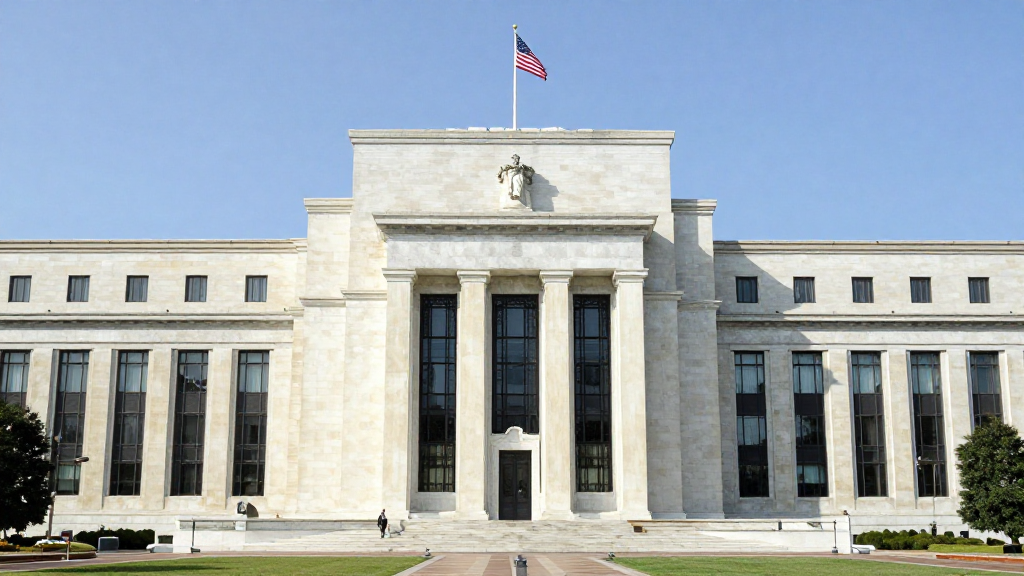
Fed Holds Rates Steady but Signals Two Cuts Are Coming in 2026
The Federal Reserve held its benchmark interest rate steady at 5.25–5.50 percent at its June 17, 2026, policy meeting, but the accompanying statement and fresh projections revealed a meaningful shift in the central bank’s near-term trajectory. Officials now expect two quarter-point rate reductions before the end of the year, a change from the single cut penciled in just three months earlier. The dot plot — the Fed’s summary of individual rate forecasts — showed the median member projecting three cuts in total for 2026, suggesting an accelerating easing cycle as inflation pressures moderate and growth concerns mount.
Federal Reserve Chair Jerome Powell emphasized during his post-meeting press conference that the decision reflected evolving data rather than any single economic indicator. “We are not on a preset path,” Powell told reporters, adding that the Fed remains prepared to adjust its stance should the economic outlook change materially in either direction. The chair pointed to encouraging progress on inflation — core PCE has declined to 2.6 percent from a peak above 5 percent — while acknowledging that labor market conditions have cooled more than anticipated, with the unemployment rate ticking up to 4.4 percent in May.
Core Inflation Data Supports Easing Case
The case for rate cuts rests primarily on the sustained decline in the Fed’s preferred inflation gauge, the Personal Consumption Expenditures price index excluding food and energy. After peaking above 5 percent in early 2022, core PCE has been on a gradual downward path, reaching 2.6 percent in the most recent reading — its lowest level since March 2021. The Fed’s updated projections now show inflation returning to its 2 percent target by 2028, a year later than forecast in March, reflecting the asymmetric challenge of the last mile in disinflation.
Goods prices have been a reliable disinflation driver for more than two years, but services inflation — which the Fed watches most closely because it reflects domestic wage dynamics — remains stickier. Powell acknowledged that shelter costs and select service categories continue to run above levels consistent with 2 percent inflation. “The committee does not expect it will be appropriate to reduce the target range until it has gained greater confidence that inflation is moving sustainably toward 2 percent,” the FOMC statement read, echoing language that has become a standard qualifier in recent meetings.
Labor Market Cooling Complicates the Picture
The labor market picture has shifted in ways that complicate the Fed’s calibration. Nonfarm payrolls have averaged just 125,000 new jobs per month so far in the second quarter, down sharply from the 185,000 monthly average recorded in the same period last year. The unemployment rate climbed to 4.4 percent in May from 3.9 percent in March — a move that, while still historically low, represents the sharpest three-month rise since the immediate post-pandemic reopening.
Economists at Goldman Sachs said in a note following the decision that the combination of moderating inflation and an unemployment rate at or above the Fed’s long-run natural rate estimate of 4.2 percent had created the conditions for action. “The Fed has arrived at the last mile problem in inflation and a labor market that is no longer generating the kind of wage pressure that would sustain services inflation,” the Goldman team wrote. “Two cuts in 2026 seems appropriate given the balance of risks.” The bank revised its own forecast to match the dot plot, predicting the first reduction in September and a follow-up cut in December.
Market Reaction and the Path Ahead
Financial markets responded with a moderate rally after the decision, reflecting relief that the Fed had not delayed easing expectations further. The S&P 500 gained 0.7 percent on the day, while the two-year Treasury yield — which is most sensitive to near-term Fed expectations — fell 8 basis points to 4.42 percent. The dollar index dipped 0.3 percent against a basket of major currencies. Fed funds futures now price in roughly 70 percent probability of a September cut, up from 55 percent before the announcement.
The September meeting remains the most widely anticipated starting point for the easing cycle, though the Fed has made clear it will require incoming data to confirm the inflation trajectory before committing. Two more monthly jobs reports and three additional inflation readings will arrive before that decision. The global economy, meanwhile, presents an additional layer of uncertainty — the World Bank and OECD have both cut their global growth forecasts sharply in recent weeks, citing trade fragmentation and persistent weakness in manufacturing across Europe and China.
