Iran Opens Hormuz Strait: Revolutionary Guard Announces Safe Passage as Ceasefire Holds
By Rachel Torres | May 6, 2026
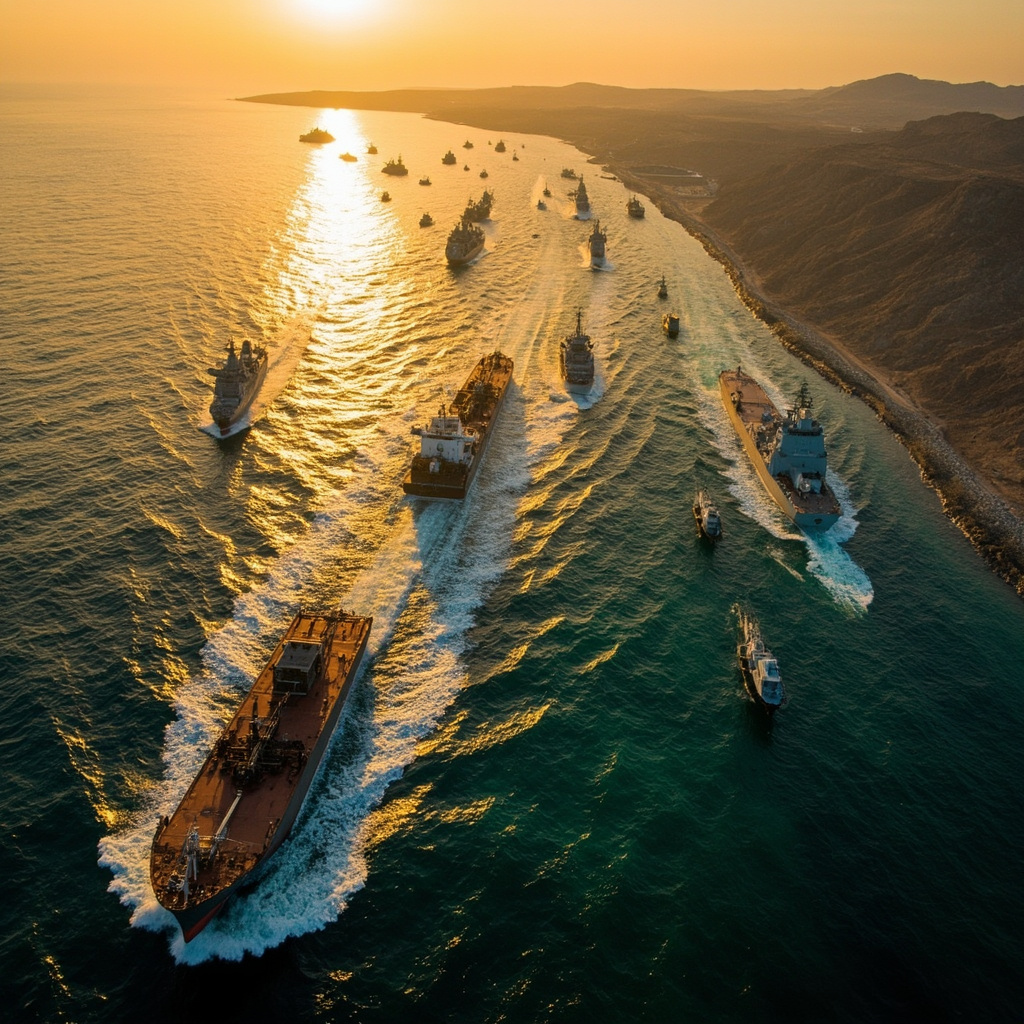
In a development that could reshape global energy markets, Iran’s Revolutionary Guard announced Wednesday that safe passage through the Strait of Hormuz would be facilitated under new procedures, just days after President Trump paused the U.S. military operation to escort commercial vessels through the strategic waterway.
The statement, issued by the Revolutionary Guard’s navy command, said: “With the end of the aggressors’ threats and in light of new procedures, safe and sustainable transit through the strait will be facilitated.” However, the Guard did not specify what those procedures entail, leaving shipping companies and global markets uncertain about the practical terms of passage.
Key Developments
- Iran’s Revolutionary Guard announces “safe and sustainable transit” through Hormuz
- Trump pauses Operation Project Freedom, warns bombing will resume “at much higher level” without a deal
- Iran confirms receiving U.S. proposal, says it is under review
- Pakistan continues mediating between Washington and Tehran
- Spirit Airlines ceases operations, citing oil price surges from the conflict
A Fragile Opening
The Strait of Hormuz — the narrow waterway through which roughly 20 percent of the world’s oil passes daily — has been effectively closed since the U.S. and Israel launched their attack on Iran on February 28. The closure has disrupted global energy supplies, pushed fuel prices to multi-year highs, and triggered cascading economic consequences worldwide.
Iran’s announcement comes amid a fragile ceasefire that has held despite multiple exchanges of fire. The Pentagon confirmed that the ceasefire remains in effect, even as the UAE reported Iranian attacks on commercial vessels attempting to transit the strait. The contradictory signals underscore the tenuous nature of the current moment: Iran says ships can pass, but commercial operators remain deeply wary.
Trump’s Ultimatum
President Trump, in a statement posted online, framed the Hormuz opening as conditional on Iran accepting a broader peace deal. “Assuming Iran agrees to give what has been agreed to, which is, perhaps, a big assumption, the already legendary Epic Fury will be at an end, and the highly effective Blockade will allow the Hormuz Strait to be OPEN TO ALL, including Iran,” he wrote.
He added an explicit threat: “If they don’t agree, the bombing starts, and it will be, sadly, at a much higher level and intensity than it was before.”
The bellicose rhetoric has left analysts questioning whether the Hormuz opening represents a genuine de-escalation or merely a tactical pause by Tehran while it reviews the U.S. proposal. Iran’s Foreign Ministry spokesperson Esmaeil Baqaei confirmed that “the American plan and proposal is still being reviewed by Iran,” with Pakistan serving as the intermediary.
Economic Shockwaves
The Hormuz closure has already inflicted significant economic damage. Spirit Airlines ceased operations on May 2, citing oil price surges that made its ultra-low-cost business model unviable. The carrier had been seeking a government bailout, but the deal fell through as fuel costs continued to climb.
Global shipping companies have rerouted vessels around the Cape of Good Hope, adding weeks to transit times and thousands of dollars per container. Insurance premiums for vessels in the Persian Gulf have skyrocketed, and several major shipping lines have suspended bookings to Gulf ports entirely.
The UAE’s General Civil Aviation Authority announced that normal air traffic operations have resumed, lifting temporary precautions imposed at the start of the conflict — a small but significant signal that some aspects of regional commerce are normalizing even as maritime routes remain contested.
The Pakistan Channel
Pakistan’s role as mediator between Washington and Tehran has grown increasingly central. Islamabad has relayed messages between the two capitals and hosted preliminary talks. Iran’s 14-point proposal for ending the conflict was submitted to Pakistan on May 2, and Trump has publicly said he is reviewing it.
The details of the proposal remain undisclosed, but regional analysts believe it includes conditions on sanctions relief, nuclear inspections, and guarantees about Iran’s maritime behavior. The fact that Iran is now publicly announcing safe passage through Hormuz suggests that at least some elements of a deal may be falling into place — though nothing is confirmed.
What Happens Next
The coming days will be decisive. If Iran’s “new procedures” for Hormuz transit prove workable and commercial shipping resumes, oil prices could stabilize. If the ceasefire fractures or the U.S. concludes that Iran is not negotiating in good faith, the military campaign — which Trump has dubbed “Epic Fury” — could escalate dramatically.
For now, the world watches the narrow strait, where the difference between peace and war may come down to the fine print of procedures that Iran has yet to disclose.
Key Questions
▸ What are Iran’s “new procedures” for Hormuz transit?
Iran has not disclosed the specific terms. The Revolutionary Guard’s statement only said safe passage would be “facilitated” — without clarifying whether ships need Iranian approval, must pay fees, or face inspections. Until these details are public, major shipping companies are unlikely to resume normal operations.
▸ Is the ceasefire holding?
The Pentagon says yes, despite reported exchanges in the strait. However, the UAE has accused Iran of continuing to attack commercial vessels, and the situation remains volatile. The ceasefire appears to be holding at the military level but not necessarily at the maritime level.
▸ What happens if Iran rejects the U.S. proposal?
Trump has warned that bombing would resume “at a much higher level and intensity.” Military analysts say this could mean expanded targeting of Iranian military infrastructure and a full reopening of the naval blockade. Oil markets would likely see further price spikes.