Israeli Defense Minister: Trump’s Decision Prevented Full Hezbollah Elimination
Israeli Defense Minister Israel Katz said Wednesday that President Donald Trump's decision to link the Iran and Lebanon tracks of diplomatic negotiations prevented Israel from completing the full elimination of Hezbollah, according to a cabinet statement read to journalists in Tel Aviv.
Israeli Defense Minister Israel Katz said Wednesday that President Donald Trump’s decision to link the Iran and Lebanon tracks of diplomatic negotiations prevented Israel from completing the full elimination of Hezbollah, according to a cabinet statement read to journalists in Tel Aviv.
Speaking at a hastily convened press conference alongside Prime Minister Benjamin Netanyahu, Katz offered a rare public acknowledgment that US diplomatic pressure had directly shaped Israel’s military calculus during the most intense phase of operations against the Lebanese militant group. The comments underscored the depth of tension between Israel’s battlefield objectives and the Trump administration’s efforts to broker a broader regional agreement.
Trump Pressure Forced Operational Changes
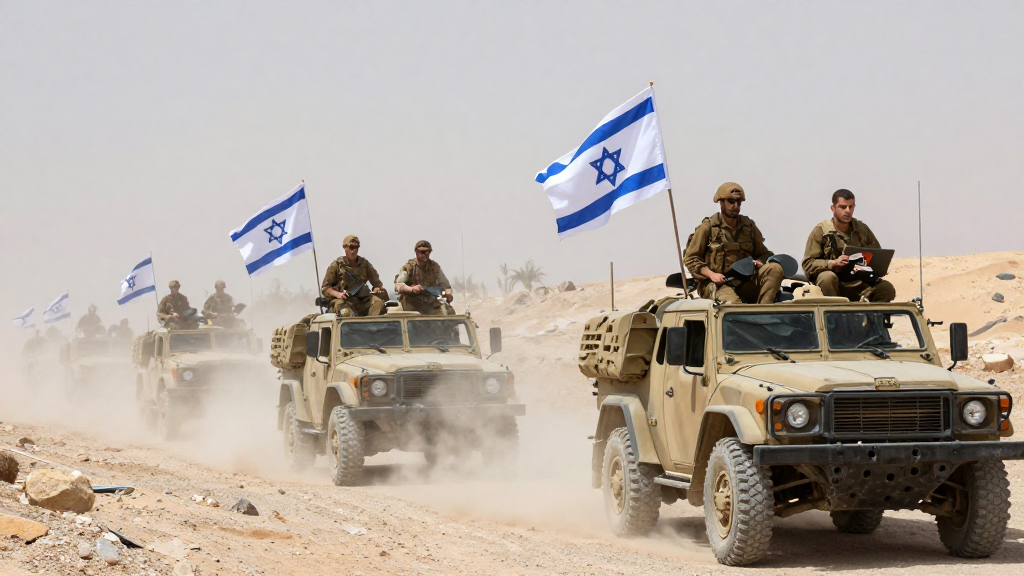
Israeli military officials, speaking on condition of anonymity because they were not authorized to brief the press, confirmed that the IDF had prepared expanded ground operations aimed at dismantling Hezbollah’s missile and tunnel infrastructure in southern Lebanon. Those plans were shelved after the Trump administration insisted on connecting progress on Lebanon to a parallel diplomatic track with Tehran.
According to Katz, Netanyahu resisted repeated US requests to scale back operations but ultimately accepted a ceasefire framework that left Hezbollah’s leadership structure intact. “The linkage policy the Americans insisted on cost us the ability to finish the job,” Katz said. “Hezbollah survives today because Washington needed a grand bargain more than Israel needed a clear victory.”
The minister declined to specify which US officials delivered the demands, but two people familiar with the discussions confirmed that Secretary of State Marco Rubio had pressed Israel to accept the package during a call with Netanyahu in late May. The people spoke on condition of anonymity because the diplomatic exchanges were private.
IDF to Remain Until Hezbollah Disarms
Under the ceasefire framework brokered by the United States, Israeli forces may remain in southern Lebanon until Hezbollah is fully disarmed. The IDF has maintained a presence along the Litani River corridor since late 2024, though the pace of operations has slowed considerably since the truce took effect.
Defense officials told the Associated Press that roughly 3,000 Israeli troops remain deployed in southern Lebanon and that a full withdrawal depends on verification mechanisms that have yet to be finalized with Lebanese authorities and international monitors. The officials said the current deployment is sustainable but not indefinite.
Hezbollah has refused to surrender its weapons, arguing that only the Lebanese state has the authority to monopolize force on its territory. The group has continued small-scale provocations along the border, including the placement of surveillance devices in areas nominally covered by the ceasefire agreement, according to UN peacekeepers in the region.
Diplomatic Fallout and What Comes Next
The Katz statement immediately drew criticism from opposition lawmakers in Jerusalem, who accused the government of using the Pentagon’s internal debates as a shield for a policy of managed conflict rather than decisive victory. “You cannot have it both ways — claim you were restrained by Americans while boasting about the scope of what you achieved,” said Yair Lapid, leader of the opposition Yesh Atid party.
Washington has not commented publicly on Katz’s specific allegations. State Department spokesman Matthew Miller told reporters at a routine briefing that the United States remained committed to the ceasefire framework and was working with all parties to ensure compliance. “Our focus is on sustaining the arrangement we created,” Miller said. “We will not accept violations from any side.”
Analysts who track Lebanon and the wider Levant said the episode reflects the enduring tension between Israel’s security establishment and any administration in Washington that prioritizes regional diplomacy over unilateral military action. The upcoming round of nuclear talks between the United States and Iran, scheduled to begin in Geneva next week, is expected to test the linkage policy further and could reignite the debate inside Israel’s cabinet over whether to resume offensive operations if the talks produce visible progress.
Regional analysts note that the ceasefire arrangement has created a political dilemma for both Israel and Hezbollah. For Israel, a long-term partial presence in Lebanon risks normalizing a border anomaly that Tel Aviv has long insisted is temporary. For Hezbollah, accepting a deployment it cannot remove without appearing to have capitulated to Israeli conditions has forced the group to adopt a posture of strategic patience while banking on diplomatic progress to eventually undo the arrangement.