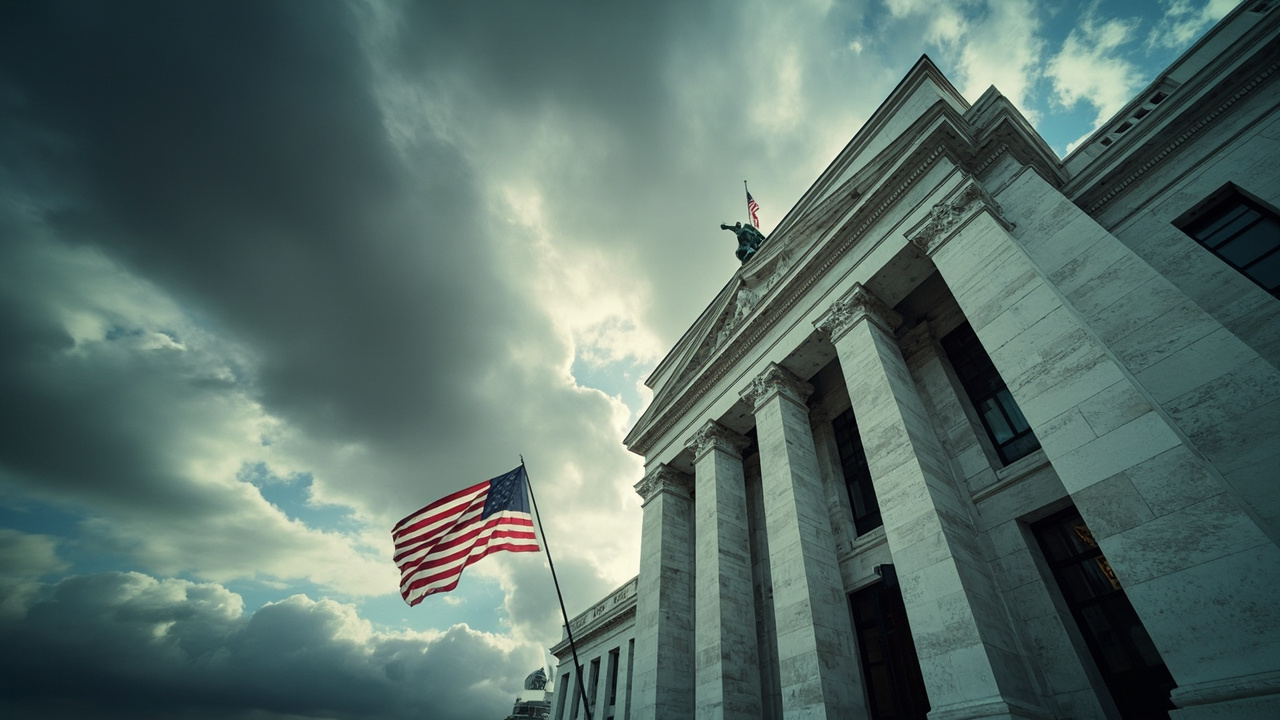
The Federal Reserve held interest rates steady on Wednesday in Kevin Warsh’s first policy decision as chairman, voting unanimously to keep the benchmark overnight rate in the 3.5%–3.75% range while new projections showed nine of nineteen officials now expect a rate hike by the end of 2026. The outcome marked a sharp pivot from the rate-cut bias that had dominated Fed communications for more than a year, with the updated policy statement dropping all forward guidance language that had signaled further reductions were likely.
Warsh’s Influence Seen in Streamlined Statement
The policy statement itself was notably shortened, returning to a format reminiscent of the Alan Greenspan era, and was approved by a unanimous 12–0 vote. The revised document removed any language about future rate moves and instead simply stated the rate decision while reaffirming the central bank’s intent to maintain ample reserves in the banking system. Analysts said the stripped-down communication style reflected Warsh’s early influence barely three weeks into the job after his appointment by President Donald Trump, who had publicly demanded rate cuts.
The statement acknowledged that productivity growth and capital investment are strong while noting that inflation remained elevated relative to the committee’s two percent goal. It attributed elevated prices in part to supply shocks that have driven price increases in certain sectors, including energy. The tone stood in stark contrast to the detailed forward-looking guidance that had characterized recent Fed communications under Warsh’s predecessor.
Inflation Outlook Deteriorates Sharply
The quarterly Summary of Economic Projections painted a considerably darker picture for inflation than the March forecast. The end-of-2026 inflation outlook was marked up to 3.6% from 2.7%, even as the projection for rate cuts by year-end was abandoned without a single increase actually being implemented. The policy rate is now expected to remain at its current level through the end of 2026 before returning to today’s level by the end of 2027 and easing modestly further in 2028.
The committee’s own dot-plot chart showed a hawkish tilt, with nine officials penciling in a quarter-point rate increase before year-end. Only eighteen of nineteen policymakers submitted projections, with the missing dot presumably withheld by Warsh himself, who has been critical of the quarterly Summary of Economic Projections in the past. The unemployment rate is now expected to end 2026 at 4.4%, unchanged from the March projection.
Market Reaction and Rate Cut Bets Unwound
Treasury yields rose immediately after the release of the policy statement and updated projections. U.S. stocks fell modestly while the U.S. dollar gained ground against a basket of currencies. Short-term interest-rate futures, which had been pricing in a meaningful chance of rate cuts as recently as last month, rapidly repriced the outlook. Traders now see a higher probability of a rate hike by September than a hold, a dramatic reversal from the easing expectations that had dominated markets earlier in the year.
The revised format was seen as giving the new chairman maximum flexibility to respond to incoming data without being constrained by market expectations embedded in prior forward guidance. With inflation still running well above target and employment showing resilience, that flexibility may be tested sooner rather than later. The combination of elevated inflation and slowing growth has revived debates among economists about whether the Fed risks repeating the policy errors of the 1970s.
Economic Growth Subtly Downgraded
Economic growth projections were marked down slightly even as the Fed emphasized strength in productivity and capital investment. The divergence between a Fed intent on signaling patience on rate cuts and an economy showing early signs of deceleration reflects the increasingly complex environment facing policymakers. Housing starts have moderated, consumer spending growth has slowed from the red-hot pace of early 2026, and business investment surveys point to a more cautious tone among corporate planners.
“We are not declaring the inflation battle won,” one Fed official noted, speaking on condition of anonymity to discuss internal deliberations. “The data will determine our next moves, and we are prepared to act in either direction.” With Warsh at the helm and markets priced for hikes, the path of least resistance for borrowing costs may now be upward rather than down.