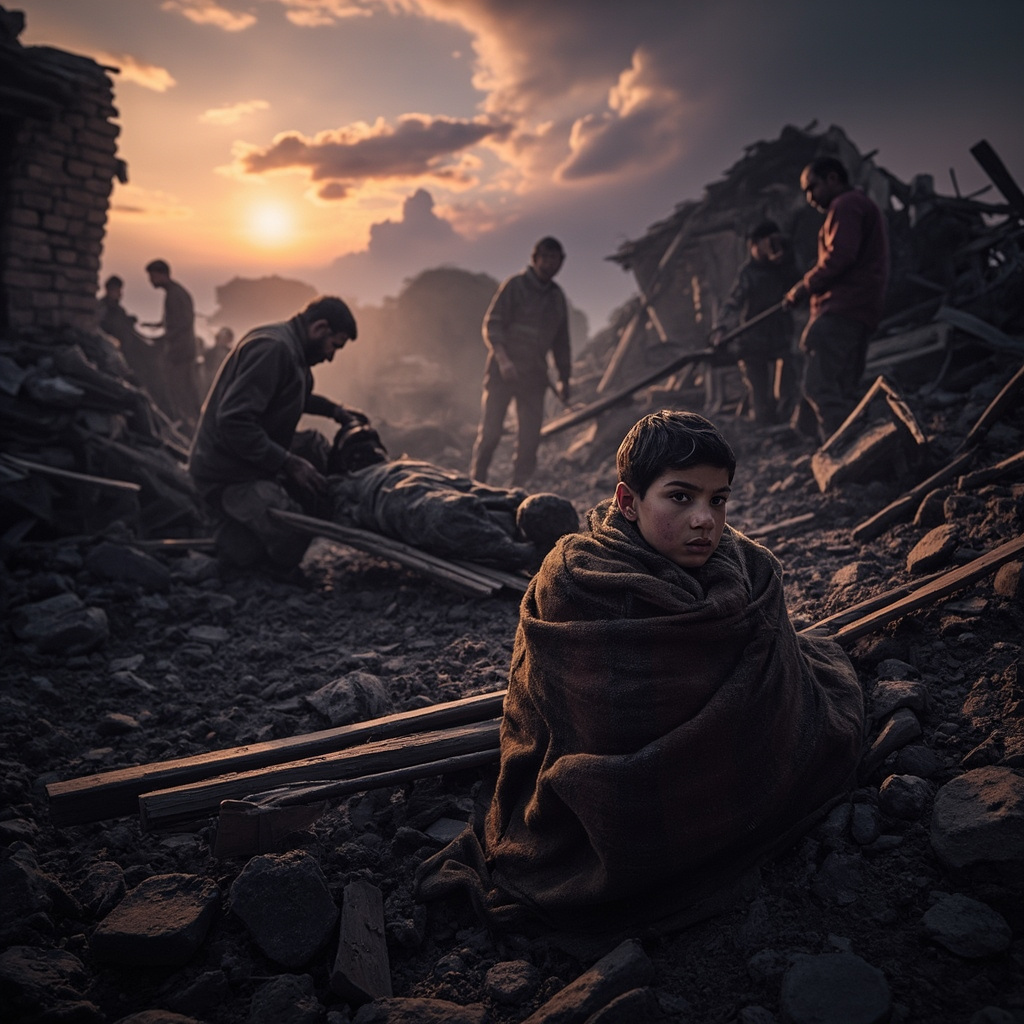
Pakistani airstrikes killed at least 36 civilians and wounded more than 160 others in three eastern provinces of Afghanistan on Sunday night, Afghan officials said Monday, in the deadliest single exchange of cross-border violence in months. The strikes, which Pakistan described as an intelligence-based operation targeting militant hideouts, came 24 hours after a Karachi militant attack claimed by a breakaway faction of the Pakistani Taliban killed three security personnel. The United Nations confirmed at least 28 civilian deaths and said its verification work was ongoing, with teams deployed to the provinces of Paktia, Paktika, and Kunar.
The strikes represent the most severe flare-up in a months-long cycle of violence between Islamabad and the Afghan Taliban government that intensified in late 2025, when Pakistani forces launched an unprecedented campaign of airstrikes on Afghan cities including Kabul and Kandahar. The two sides agreed to a fragile ceasefire in March, but that truce has frayed steadily. Afghan authorities say Pakistani strikes in June alone have killed 25 people across multiple incidents. Pakistan, meanwhile, has simultaneously positioned itself as a diplomatic mediator between the United States and Iran in the ongoing Gulf standoff, a role that analysts say gives Islamabad leverage but also complicates its position as it conducts strikes in Afghanistan.
A Community Struck Twice
The most devastating incident occurred in Chamkani district, Paktia province, where Pakistani forces struck a civilian home, killing an older man and a child, Afghan government spokesperson Hamdullah Fitrat said. When villagers gathered to rescue the wounded, the area was struck again, killing 28 more people and wounding 158, according to Fitrat. Six civilians, most of them women and children, died in a separate strike on a home in Gyan district, Paktika province. A third strike hit a civilian home in Kunar province, killing 30 livestock but causing no human casualties. The pattern of striking rescuers drew particular condemnation from human rights groups. “This is a war crime if confirmed,” said John Fisher, Geneva director at Human Rights Watch. “Deliberate or reckless strikes on civilians gathering to help the wounded violate every principle of international humanitarian law.”
Escalating Cross-Border Violence
Pakistan information minister Attaullah Tarar disputed the civilian toll, saying the operations targeted hideouts of Jamaat-ul-Ahrar and Fitna al-Khawarij, militant groups it blames for the Karachi assault. “Pakistan has always strived for maintaining peace and stability in the region, but at the same time shall not compromise on the safety and security of our citizens,” Tarar said. “This was a precise operation against confirmed terrorist positions.” The Afghan Taliban government denies harboring Pakistani militant groups on its soil, calling the accusation unfounded. Taliban deputy spokesperson Zabihullah Mujahid condemned the strikes as a “cowardly act of aggression” and an “act of brutality,” adding that the government would “retaliate in due time.”
UN Confirms Civilian Toll
The UN Assistance Mission in Afghanistan confirmed 28 civilian deaths across Paktia, Paktika, and Kunar provinces on Monday, saying its teams were still verifying the full casualty picture. UN Secretary-General Antonio Guterres called for all parties to respect international humanitarian law, reiterating principles of precaution, distinction, and proportionality. According to UNAMA data, at least 372 civilians were killed and 397 wounded in Pakistani airstrikes and border clashes in the first three months of 2026 alone. The UN mission called for an independent investigation, a demand Pakistan has so far refused. Despite mediation efforts by China, Russia, Turkey, and Saudi Arabia, no lasting ceasefire agreement has been reached and border crossing points have been largely closed since October.
What Happens Next
Afghanistans foreign ministry summoned Pakistan charge dAffaires to deliver a formal protest, and the Taliban government has vowed retaliation without specifying a timeline or method. The next 72 hours will be critical: any further civilian casualties from a counter-strike would deepen the humanitarian crisis and draw renewed international pressure, while a pause could open space for renewed mediation talks. Pakistan is expected to brief the United States on its counter-terrorism justification for the strikes, a diplomatic move that will test whether Washingtons preference for de-escalation in Afghanistan will clash with its simultaneous need for Pakistani cooperation in the Gulf talks.