Supreme Court Becomes Trump’s Immigration Arbiter, Upholds Most of Hardline Agenda Except Birthright Citizenship
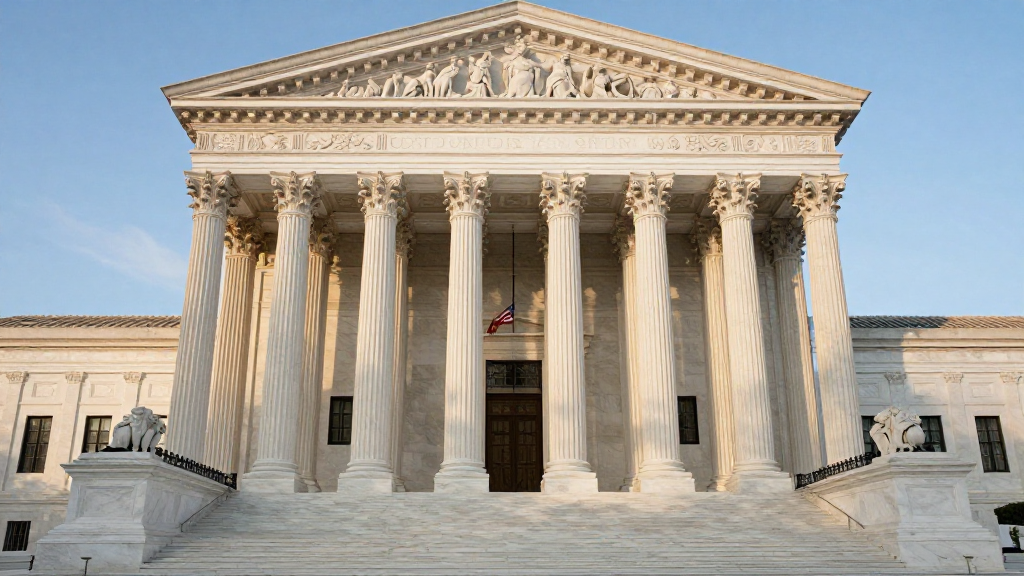
The Supreme Court closed out its 2025-2026 term on Tuesday as the defining legal battleground of President Donald Trump’s hardline immigration agenda, handing down a series of rulings that will reshape who can enter, stay, and become American for decades to come. The justices upheld the administration’s authority to terminate humanitarian protections for hundreds of thousands of migrants from Haiti and Syria, cleared the way for sweeping restrictions on asylum applications, and granted immigration officers expanded powers over returning green card holders — but drew a clear constitutional line at birthright citizenship that Trump has called his most important domestic priority.
Birthright Ruling: A Landmark Defeat for Trump
In the most politically charged decision of the term, a bare majority of five justices upheld the long-settled understanding of the 14th Amendment, ruling that anyone born on American soil — regardless of their parents’ immigration status — is a citizen of the United States. The ruling invalidated Trump’s executive order, signed on his first day back in the White House in January 2025, which sought to deny citizenship to children born to undocumented or temporary migrants.
Activists celebrated outside the Supreme Court following the ruling, but Republican advocates for immigration restriction immediately pivoted to alternative avenues. Mark Krikorian, executive director of the Center for Immigration Studies, which pushes for reduced legal immigration, said the decision makes large-scale deportation efforts all the more urgent as a policy goal.
“I think it’s going to have real policy impact,” Krikorian told the Associated Press. “Policies governing programs that allow foreigners to come to the U.S. to work or study at university need to be tightened up to prevent people from coming to the U.S. and having children who then become citizens.”
House Democratic Leader Hakeem Jeffries and members of the Congressional Hispanic Caucus held a press conference at the Capitol to applaud the ruling, with Chairman Adriano Espaillat calling it “a victory for the Constitution and for the idea that citizenship belongs to everyone born on American soil.”
TPS Terminated, Asylum Shelved: The Court’s Green Light
Just five days earlier, the same 6-3 conservative majority that decided birthright citizenship cleared the way for the administration to end Temporary Protected Status for approximately 350,000 Haitians and 6,000 Syrians who had fled war and natural disaster. The ruling, announced June 25, leaves those individuals unable to work legally in the United States and vulnerable to deportation — despite ongoing conditions in both countries that critics say make return dangerous.
David Bier, director of immigration studies at the Cato Institute, said the decision’s reach extends far beyond the immediate plaintiffs. Roughly one million people currently hold TPS protections across thirteen countries, and Bier said the court’s reasoning effectively closes off any judicial avenue to challenge termination decisions.
“It just fully closed the door to any challenges,” Bier said. “The administration can now terminate any TPS designation without court review, and the people affected have no meaningful recourse.”
The court also permitted the administration to impose stricter limits on asylum seekers, allowing immigration officers greater discretion to deny applications at the border without full hearings. Taken together, the rulings represent a sweeping expansion of executive authority over who enters and remains in the United States — limited only by the one constitutional bright line the justices refused to cross.
Congressional Democrats have vowed legislative responses to both the TPS and asylum rulings, though passing new protections would require navigating a closely divided Senate where Republicans hold a narrow majority. The White House, for its part, signaled that Tuesday’s birthright ruling will not slow its broader immigration enforcement agenda, with administration officials pointing to Krikorian’s analysis as a roadmap for restricting citizenship through work visa and study permit policies instead.
