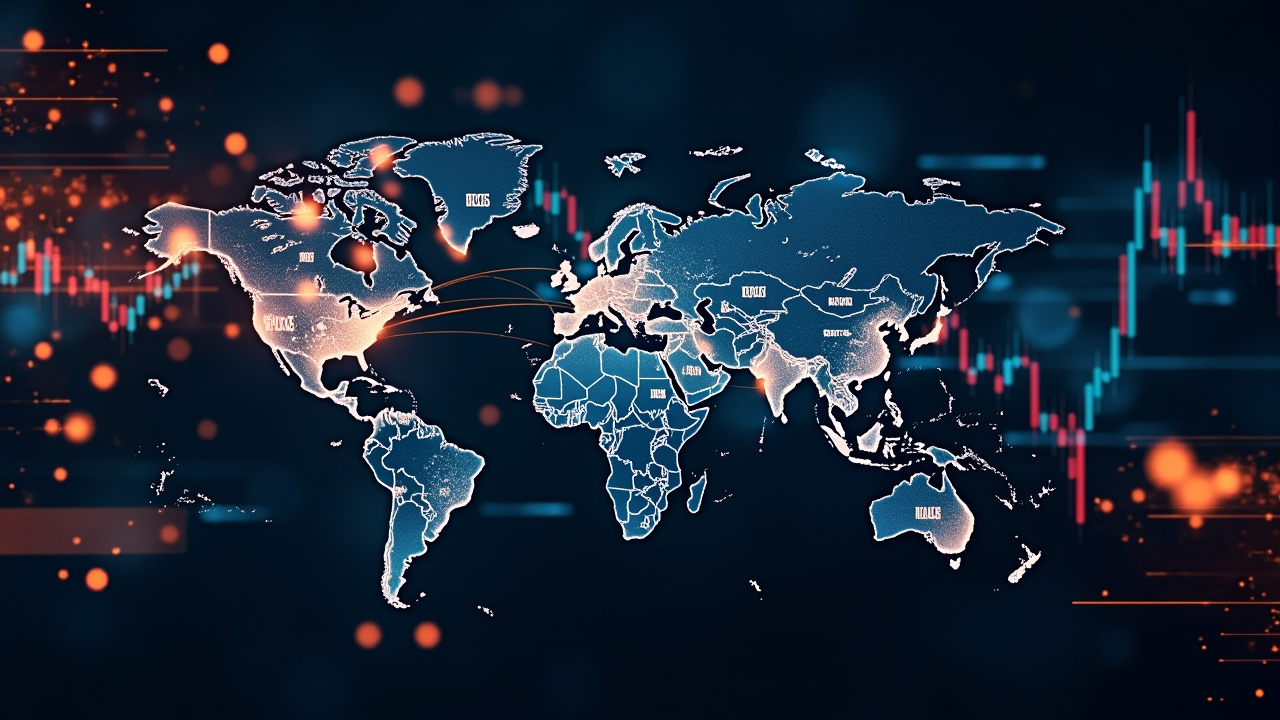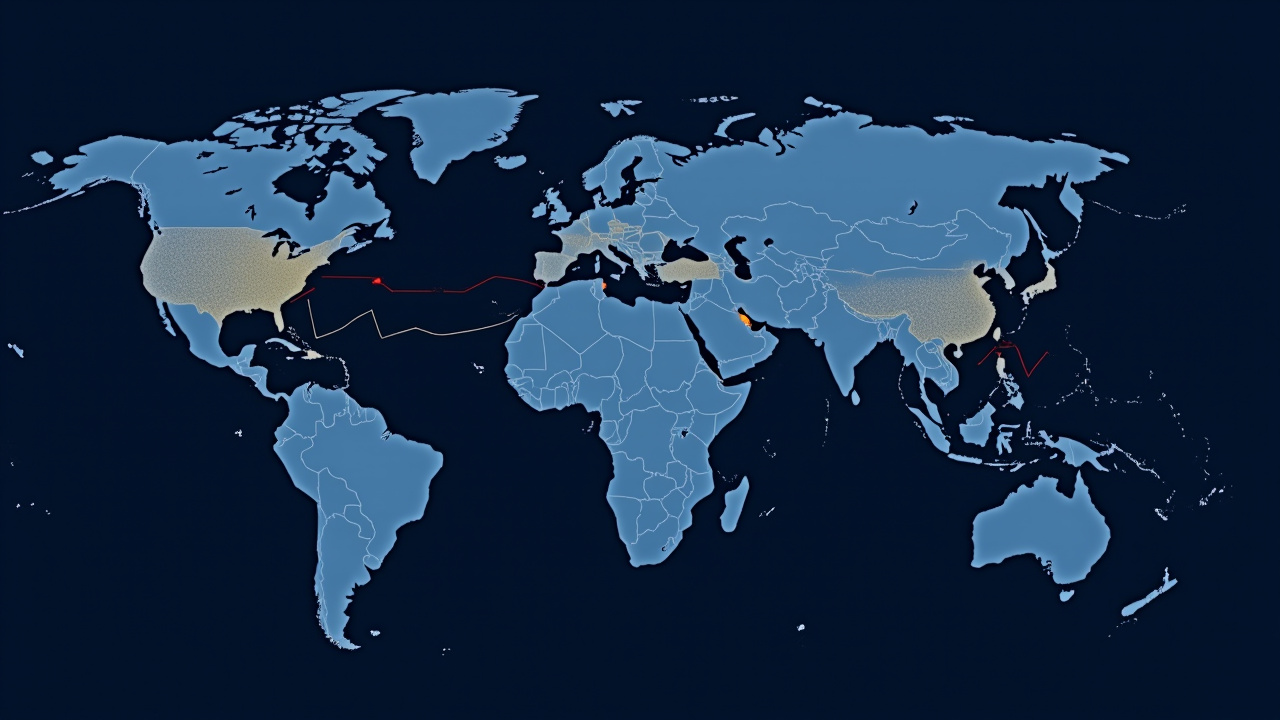
The world closed out the first quarter of 2026 with a collective sense of economic vertigo. Markets that had spent months pricing in a soft landing now find themselves recalculating in real time as a cascade of geopolitical shocks — from escalating naval tensions in the South China Sea to a second consecutive year of disrupted grain shipments from Eastern Europe — collides with structurally fragile supply chains that have never fully recovered from the 2021-era disruptions. The result is a global economy simultaneously overheating in some sectors and stalling in others, with policymakers facing a monetary and fiscal toolkit that was never designed for this particular degree of complexity.
The Supply Chain Reckoning Nobody Planned For
The global supply chain, that invisible arterial network that kept inflation tame and shelves full through most of the 2010s, has become the central battlefield of 2026’s economic anxiety. Container shipping rates on the Asia-to-Europe corridor are running at nearly three times their 2024 averages. Port congestion at Rotterdam, Singapore, and Los Angeles has returned to levels not seen since the acute phase of the pandemic — except this time, the cause is not a surge in consumer demand but a combination of retaliatory port slowdowns, insurance premium spikes following high-profile incidents in contested waters, and a growing reluctance among shipping insurers to cover routes near active geopolitical flashpoints.
The automotive sector offers a telling microcosm of the broader dysfunction. Toyota announced in March that it would cut production at three of its European plants by up to 18 percent through Q3, citing semiconductor allocation disputes and delays in cross-border logistics chains feeding its just-in-time manufacturing model. Ford and Stellantis followed with similar notices. Meanwhile, the semiconductor industry — which had been gradually normalizing after the 2022 inventory correction — is now facing fresh pressure as the Taiwan Strait situation introduces a new risk premium into component pricing that buyers had not anticipated in their procurement contracts.
We are witnessing the partial unwinding of thirty years of supply chain optimization. The efficiency-at-all-costs model assumed political stability as a given. It was not a given. — Dr. Miriam Kessler, Director of Trade Economics, Peterson Institute
Monetary Policy at the Crossroads
The Federal Reserve finds itself in an extraordinarily uncomfortable position as spring 2026 arrives. Headline inflation, driven by services and shelter costs, remains stubbornly above the 3 percent threshold that policymakers had hoped would be the floor of a sustainable descent toward target. Core PCE — the Fed’s preferred inflation gauge — printed at 3.2 percent in February, its highest reading in fourteen months. Yet simultaneously, forward-looking manufacturing PMI data from the Chicago and New York Feds suggest that industrial activity is softening in a way that points toward contraction rather than the robust growth the Fed’s models had projected for this stage of the cycle.
This stagflationary pincer — too much inflation to cut, too much economic fragility to hike — has forced Fed officials into a holding pattern that markets are increasingly reading as paralysis. The February minutes, released with unusual candor, acknowledged internal divisions that have not been so visibly aired since the 2007-2008 period. Several regional Fed presidents have publicly floated the idea of a geopolitical risk premium adjustment to the Fed’s reaction function — essentially arguing that supply shocks originating outside the domestic economy warrant a different monetary response than domestic demand shocks.
The European Central Bank faces a similarly unenviable dilemma. Eurozone headline inflation ticked up to 3.4 percent in March, driven largely by energy price volatility tied to the ongoing uncertainty surrounding Russian gas transit agreements expiring at the end of Q2. ECB President Christine Lagarde has signaled a wait and see posture that markets have interpreted with skepticism. The euro has weakened against the dollar by approximately 4.5 percent year-to-date, providing a partial buffer for eurozone exporters but simultaneously importing inflation through more expensive energy imports priced in dollars.
Debt, Deficits, and the Fiscal Squeeze
If monetary policy is constrained, fiscal policy is arguably in worse shape. The United States federal deficit is projected by the CBO to reach $2.4 trillion in fiscal year 2026 — approximately 8.3 percent of GDP and pushing total public debt toward 130 percent of GDP, a level not seen since the immediate aftermath of World War II. Interest expense on the existing debt stock is now the fastest-growing line item in the federal budget, surpassing defense spending for the first time in modern history. The bond vigilantes have begun making their presence felt in the 10-year Treasury market, which crossed the 5.2 percent barrier in late March for the first time since 2007.
The political economy of fiscal consolidation remains as toxic as ever. Neither major party in the United States shows genuine appetite for the spending reductions or revenue increases that a credible debt stabilization program would require. The administration has floated the idea of a geopolitical emergency exemption to the debt ceiling, but this proposal has encountered resistance from both ends of the political spectrum. Across the Atlantic, Germany’s debt brake constitutional constraint is increasingly in tension with the coalition government’s stated commitment to both defense spending increases and industrial policy subsidies.
The dangerous thing is not any single vulnerability. It is the combination of vulnerabilities acting simultaneously — supply shocks, financial fragilities, geopolitical disruptions — in a world where the standard policy tools have already been spent. — Nouriel Roubini, Project Syndicate, March 2026
Emerging Markets: The Hidden Fault Line
While the headline economic drama plays out in Washington, Frankfurt, and the trading floors of New York and London, a quieter but potentially more consequential crisis is unfolding across a cluster of emerging market economies simultaneously squeezed by dollar strength, commodity price volatility, and the withdrawal of global capital flows that had sustained their growth models through the previous decade of near-zero interest rates. The Institute of International Finance’s latest data shows portfolio outflows from emerging market debt and equity funds running at their highest rate since the 2020 COVID shock.
Turkey, Argentina, and Egypt remain the most visible cases of fiscal and currency distress, but the deeper concern among IMF watchers is a cluster of mid-tier emerging economies — countries like Pakistan, Bangladesh, and several in sub-Saharan Africa — that accumulated significant dollar-denominated debt during the low-rate era and now face a debt service burden consuming an ever-larger share of export earnings. Sri Lanka’s 2022 default, which at the time seemed an outlier, increasingly looks like the opening chapter of a longer story. The IMF’s debt sustainability analyses show that a sustained period of elevated U.S. interest rates makes repayment trajectories mathematically impossible without either debt restructuring or a dramatic reversal in capital flows — and possibly both.
The China
Factor: Decoupling at a Cost
No analysis of the global economic outlook in 2026 can avoid the gravitational pull of China’s structural slowdown. The People’s Republic grew at 3.9 percent in 2025 — its second consecutive year below the 5 percent target Beijing considers politically necessary — and early indicators for 2026 suggest continued deceleration. The property sector, which represented up to 25 percent of Chinese GDP at its peak and has been in a prolonged deleveraging process since 2021, continues to act as a structural drag that Beijing’s industrial policy investments have not yet been able to fully offset. Youth unemployment remains above 21 percent, consumption is subdued, and local government finances are stretched thin by accumulated liabilities of off-balance-sheet financing vehicles.
The Biden-Trump trade war architecture, maintained and expanded by the current administration, has introduced a new layer of complexity into Sino-U.S. economic relations. The tariff regime now covers approximately $540 billion in bilateral trade, with escalation dynamics that show no signs of abating. American companies with significant China revenue have begun a structural reassessment of their supply chain footprints — a process accelerating in sectors deemed strategically sensitive, including semiconductors, pharmaceuticals, and rare earth processing. The economic cost of this decoupling is substantial for both sides, but the political calculus in both Washington and Beijing has prioritized security over efficiency.
What Policymakers Can and Cannot Do
The uncomfortable truth underlying this analysis is that much of what ails the global economy in 2026 lies outside the traditional scope of monetary and fiscal policy. Geopolitical risks — the Taiwan Strait, the Russia-NATO shadow conflict, the fracturing of the post-1945 trade architecture — cannot be resolved by central bank rate decisions or congressional appropriations. What economic policy can do is build resilience: diversify supply chains, maintain credible fiscal buffers, invest in domestic energy security, and preserve the multilateral institutions that provide the plumbing through which global commerce flows.
The IMF, for all its well-documented shortcomings, remains the lender of last resort for the most vulnerable economies and a vital source of early warning analysis. The institution’s April World Economic Outlook update — with its 2.8 percent global growth forecast, down 0.3 percentage points from January — should be required reading for every finance minister and central bank governor. The fact that such warnings are increasingly falling on deaf ears, drowned out by domestic political pressures and institutional fatigue, may itself be the most consequential risk of all.
David Foster is a Senior Analyst for Media Hook, specializing in geopolitical analysis, economic trends, and the forces reshaping the global order.