Warsh Delivers Hawkish Signal at ECB Forum, Inflation Still Too High
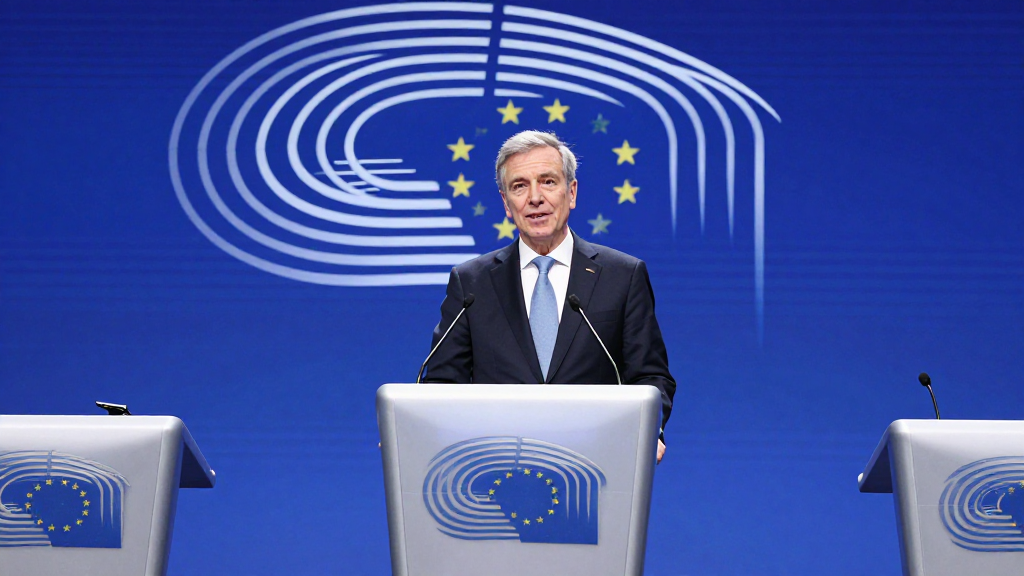
Warsh Delivers Hawkish Signal at ECB Forum, Declines to Endorse Rate Cuts
Federal Reserve Chair Kevin Warsh delivered his most hawkish remarks to date at the European Central Bank Forum in Sintra, Portugal, on Wednesday, telling a gathering of the world’s most powerful central bankers that inflation remains too elevated and that the U.S. central bank remains firmly committed to its 2% target. The remarks, Warsh’s first major international appearance since taking the Fed chair role in May 2026, were interpreted by financial markets as a clear signal that near-term rate cuts are off the table and that further tightening remains a live possibility heading into the second half of the year.
“We’re all in the price stability business, that might not be our only business, but if there was a common thing I heard over the last couple of days, it was open-mindedness on these questions of AI, open-mindedness on productivity, but we’ve all looked around, and we’ve seen that prices are too high,” Warsh told CNBC’s Sara Eisen during the panel. The statement came as a surprise to some investors who had expected Warsh, a former critic of high interest rates, to strike a more dovish tone after his appointment earlier this year. The shift in rhetoric reflects the severity of the inflation challenge he inherited from his predecessor, and it underscores how quickly the political and economic landscape can reshape a central banker’s messaging once they assume the top post.
The remarks placed Warsh alongside ECB President Christine Lagarde, Bank of England Governor Andrew Bailey, and Bank of Canada Governor Tiff Macklem on a panel united by skepticism toward the kind of explicit forward guidance that markets have relied upon for years. Lagarde went so far as to say she regretted having felt bound by forward guidance during her tenure, a striking admission that underscored how the practice of pre-committing to rate paths has become increasingly untenable in an era of persistent price shocks. Warsh, for his part, said the group found common ground on letting data drive decisions meeting by meeting rather than offering explicit forward signals, a framework that raises the premium on every incoming economic release and makes policy less predictable for investors who had grown accustomed to parsing guidance for clues about the path ahead.
Inflation Data Confirms the Challenge: Core PCE at 3.4%, CPI at 4.2%
The hawkish pivot in Warsh’s rhetoric reflects hard economic data that continues to跑 out above the Fed’s comfort zone. The Fed’s preferred inflation gauge, the personal consumption expenditures price index excluding food and energy, registered at 3.4% in May, while the broader all-items index came in even hotter at 4.1%. The consumer price index, which receives wider public attention, showed prices rising 4.2% annually as of May, its highest reading in three years. The combination of elevated readings across multiple measures has complicated the Fed’s effort to declare victory on inflation and has forced policymakers to confront the possibility that price pressures are more entrenched than previously assumed, even as some segments of the economy show signs of cooling.
“If there were people in household or the business sector, in the financial markets, who thought that this central bank was going to be comfortable with an inflation objective above 2%, well, I guess they’d be disappointed,” Warsh said at Sintra. “We’re going to deliver price stability in the U.S.” The commitment to the 2% target, repeated in multiple forums, leaves little room for the Fed to declare an early victory even as some leading indicators suggest inflation expectations are beginning to ease. Warsh specifically cited the moderation in inflation expectations as measured by surveys of households and by the pricing of Treasury bonds, acknowledging that the direction of travel is encouraging. But the current level, he insisted, is not acceptable, and the central bank is prepared to hold or even raise its benchmark rate to close the remaining gap.
The Federal Open Market Committee voted at its June meeting to hold the federal funds rate at its current target range of 3.50% to 3.75%, a decision that left borrowing costs at their highest level in over a decade. The vote was unanimous, reflecting a rare degree of internal agreement on the need for caution, though committee members have differed publicly on how long rates should remain elevated. The June Summary of Economic Projections, released by the Fed, showed that several policymakers now see at least one additional rate hike as appropriate by year-end, a view that has been reinforced by the string of hotter-than-expected inflation readings that followed the June decision. The dots plot, which summarizes each member’s interest rate forecast, has shifted meaningfully higher since the start of the year, adding to market conviction that the Fed’s next move is more likely to be up than down.
Market Repricing Accelerates as Odds of Rate Hike Rise
Financial markets moved quickly in response to Warsh’s Sintra remarks, repricing the probability of a rate hike before year-end sharply higher. Traders who had been assigning meaningful odds to a rate cut as early as September quickly reversed course, with interest rate futures now pricing in a scenario in which the Fed holds steady through the fall and potentially raises once more before the year closes. The yield on the 2-year Treasury note, which is most sensitive to near-term Fed expectations, rose sharply following the remarks, pushing the curve deeper into inversion and reflecting renewed concern about the cost of credit for households and businesses that have been waiting for relief from the rate environment that has defined the past three years.
The equity market reaction was more muted but still telling. The S&P 500 fell modestly on Wednesday before recovering much of its losses by the close, as investors weighed the implications of higher-for-longer rates against a still-resilient labor market that continues to provide income support to consumers. The divergence between equity market resilience and the increasingly aggressive tone from the Fed reflects a tension that has defined the past 18 months of market dynamics: asset prices remain elevated in part because investors expect the Fed to eventually pivot and cut, but every piece of hot inflation data delays that pivot and raises the risk that the market’s assumption proves wrong. If the Fed is forced to raise rates further, the pressure on equity valuations, particularly in rate-sensitive sectors like real estate investment trusts and utilities, could intensify significantly, creating a more turbulent environment for portfolio managers who have positioned for a gradual cooling rather than a renewed tightening cycle.
Warsh’s Hawkish Evolution and the AI Productivity Question
Perhaps the most notable dimension of Warsh’s Sintra appearance was what it revealed about his own evolution as a central banker. Before his appointment as chair, Warsh was among the most prominent voices arguing for lower interest rates, and he frequently criticized the Fed for moving too slowly to ease financial conditions during the post-pandemic period. The stark contrast between those prior positions and his current hawkish stance has not gone unnoticed by analysts, and it raises questions about whether the transformation reflects a genuine reassessment of the data or a political adaptation to the realities of the job. Warsh appears to have concluded, based on the evidence of the past two years, that the inflation problem is more structural than cyclical and that accommodating it through rate cuts risks embedding higher prices permanently into the economy’s expectations.
On the technology front, Warsh outlined an ambitious plan to deploy artificial intelligence across the Fed’s analytical apparatus, announcing five task forces that will study how new data sources and machine learning tools can improve the central bank’s understanding of real-time economic conditions. “My hope, my aspiration, is that nine to twelve months from now we’re going to be using new technologies to understand what’s happening in the real economy in a contemporaneous real-time way that positions us as central bankers to make better decisions,” he said. The initiative represents a significant departure from the Fed’s traditionally conservative approach to data methodology and could eventually reshape how monetary policy is conducted. Warsh specifically noted that he is skeptical of conventional government data releases, calling “the conventional wisdom” his least favorite data point, a comment that suggests the Fed under his leadership may place greater weight on alternative data streams even as it continues to publish its regular reports. Whether AI-driven analysis can genuinely improve policy outcomes or simply introduce new sources of model risk remains to be seen, and the financial community will be watching the results of these task forces with keen interest as they report back over the coming months.