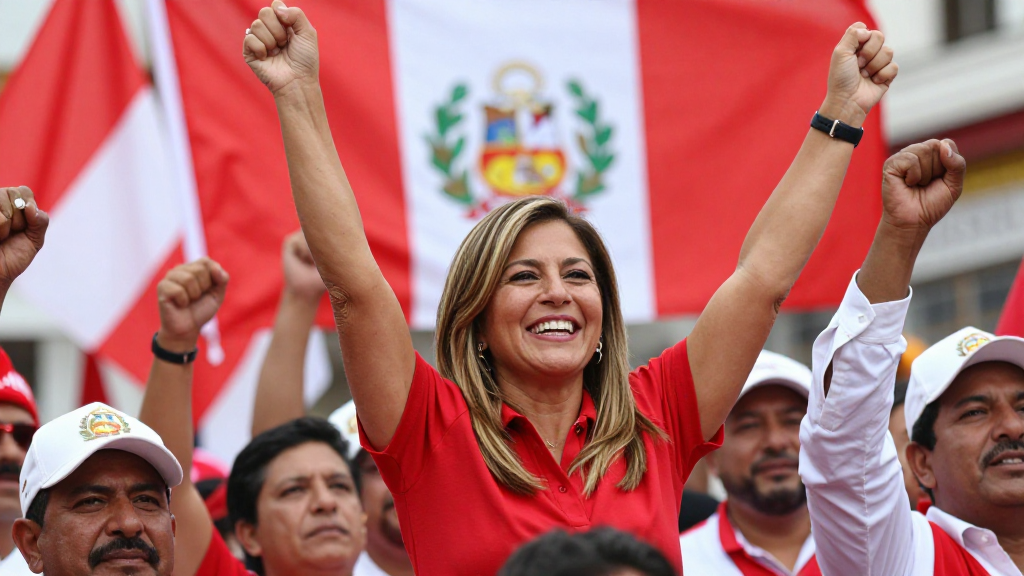
Peru’s conservative president-elect Keiko Fujimori has vowed to restore “order and hope” after defeating left-wing candidate Roberto Sánchez in the narrowest of electoral margins, in the latest victory for a resurgent Latin American right.
The 51-year-old daughter of late president Alberto Fujimori secured the top office on her fourth attempt after weeks of contested ballot reviews. She outpolled Sánchez by fewer than 50,000 votes out of more than 18 million ballots cast, the final results showed. Peru’s National Electoral Jury is scheduled to officially announce the winner on 3 July after the extended review process.
A Fourth Bid That Finally Paid Off
“Each time we draw closer to starting on the path of order and hope for all Peruvians,” Fujimori wrote on social media platform X after being proclaimed the winner. The message capped a grueling six-year journey that included two prior runoff defeats and a spell in pre-trial detention on corruption allegations she has always denied.
The election was fought squarely on rising crime and Peru’s chronic political instability, which has seen the Andean nation burn through eight presidents in a single decade. With extortion gangs, contract killings, and methamphetamine trafficking spreading from the coastal cities into the Andes, Fujimori promised a firm hand reminiscent of her autocratic father, Alberto Fujimori.
Alberto Fujimori won praise for crushing Maoist Shining Path rebels and taming hyperinflation in the 1990s, but was later disgraced, exiled, and sentenced to 25 years in prison for corruption and crimes against humanity committed in the name of fighting terrorism.
The Narrowest of Margins
The margin of victory was so tight that at one point during the vote count, Sánchez held a lead before Fujimori overtook him. Sánchez has warned he would not recognise a government headed by his rival, alleging administrative irregularities in the handling of overseas ballots.
The contested overseas vote became a flashpoint in the final weeks of the count.Election observers from the Organization of American States flagged irregularities in how the electoral authority processed ballots from Peruvians living abroad, particularly in Venezuela and the United States.
Fujimori will take office on 28 July for a five-year term. Long seen as confrontational, she worked to soften her image on the campaign trail, making overtures to moderate voters and business leaders who had previously regarded her candidacy with suspicion.
A Polarizing Legacy and the Road Ahead
For millions of Peruvians, the Fujimori name carries deep trauma. Alberto Fujimori’s regime imprisoned dozens of political opponents, shut down opposition media, and presided over disappearances and extrajudicial killings by security forces. That legacy has made Fujimori a disqualifying figure for a large segment of the electorate, blocking her path to the presidency three times before this week’s result.
Critics within Peru also blame her and her party, Fuerza Popular, for accelerating the very institutional instability that has paralyzed governance. The party’s heavy-handed deal-making in Congress under her leadership contributed to the collapses of two administrations and the prolonged impeachment battles that have dominated Peruvian politics for the better part of a decade.
Regional analysts say the outcome signals a broader shift across South America, where voters from Santiago to Bogotá have increasingly turned to conservative, crime-hardline candidates in response to rising gang violence and economic anxiety. The political wave mirrors patterns seen earlier in Brazil, where a surge in organized crime prompted voters to elect a security-first administration.