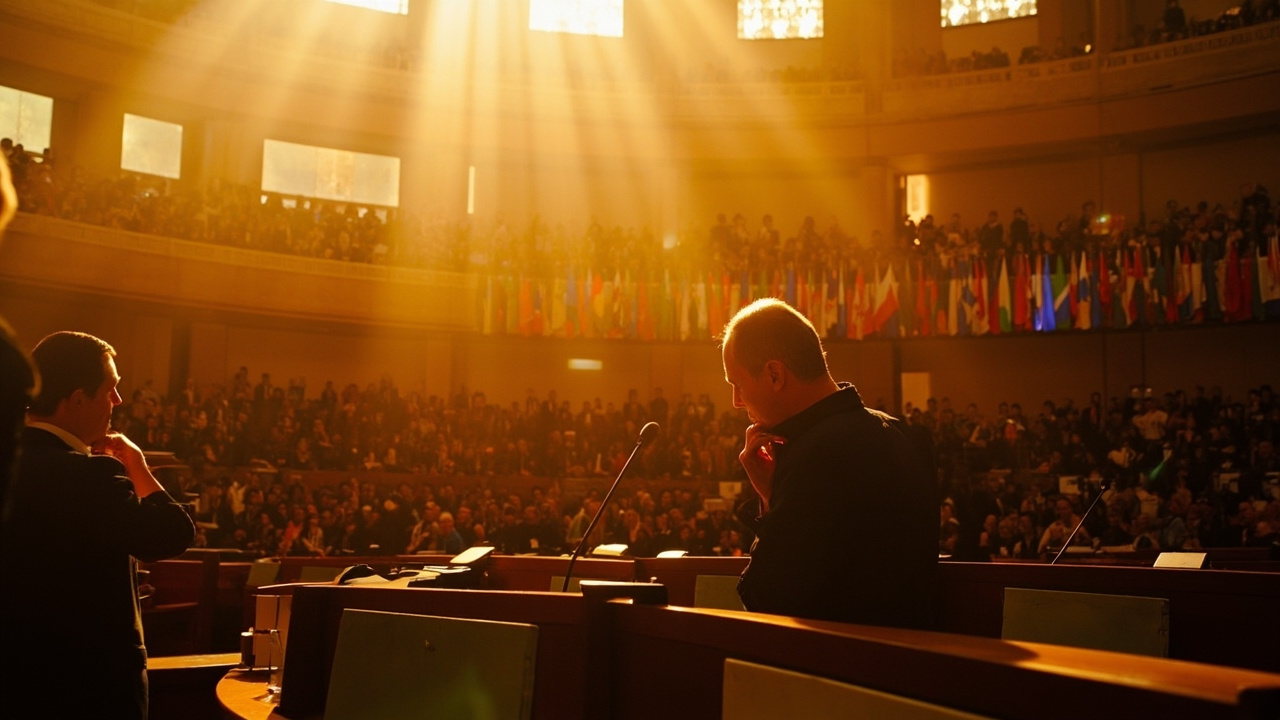
Leaders from more than 40 nations convened in Geneva on Thursday for an emergency United Nations climate summit aimed at coordinating a unified response to the extreme heatwave that has gripped Europe for nearly two weeks, killing more than 1,300 people and pushing power grids to the brink of collapse across the continent.
Death Toll Surpasses 1,300 as Temperatures Hit 40°C
The death toll from the relentless heatwave gripping Europe surpassed 1,300 on Monday as temperatures exceeding 40 degrees Celsius pushed eastward into the Balkans and Ukraine, overwhelming hospitals, straining energy infrastructure, and forcing governments to declare public health emergencies. At least 12 countries have reported heat-related fatalities, with Greece, Italy, and Romania bearing the heaviest toll. The World Health Organization described the event as the most severe heat emergency Europe has experienced in recorded history.
The extreme heat has exposed deep vulnerabilities in Europe’s energy infrastructure. Grid operators in Italy, Greece, Serbia, and North Macedonia implemented rolling blackouts for the third consecutive day, while Romania declared a national energy emergency after its largest hydroelectric plant shut down due to critically low reservoir levels. The European Commission convened an emergency session of its energy crisis panel to coordinate cross-border electricity transfers and ease pressure on the most strained systems.
European Commission President Ursula von der Leyen said the emergency gathering was a direct response to the suffering unfolding across the continent. “What we are witnessing is not a distant threat — it is an immediate crisis demanding immediate collective action,” she told reporters in Geneva. The bloc prepared to double its climate finance commitments if other major economies matched the effort, though final pledges remained contingent on congressional approval in the United States and parallel commitments from China and India.
Grid Collapse Fears Drive Emergency Summit Agenda
Behind the diplomatic language, the summit was driven by stark warnings from energy experts. The International Energy Agency warned that without coordinated intervention, several European capitals face a genuine risk of grid failure during the peak summer cooling demand period. Energy ministers from the G7 nations, meeting on the summit’s margins, agreed in principle to a shared reserve mechanism that would allow emergency electricity transfers between member states, though final details on funding and infrastructure remain unresolved pending a technical review expected to conclude by mid-July.
German Energy Minister Robert Habeck described the framework as the most significant multilateral energy cooperation agreement since the oil shocks of the 1970s. Critics, however, noted that the agreement lacks enforcement provisions and depends on voluntary contributions from member states. Von der Leyen acknowledged that long-term grid modernisation would require an estimated 400 billion euros in investment over the next decade. “What we are announcing today is a down payment,” she said. “The hard work begins now.”
Climate Finance Demands Threaten Summit Deadlock
The most contentious agenda item involves demands from developing nations that historically bear the least responsibility for greenhouse gas emissions but are experiencing disproportionate impacts from extreme weather linked to climate change. A coalition of 79 African nations, supported by Pakistan and several Pacific island states, tabled a proposal for a 50 billion euro annual climate resilience fund financed by OECD countries and major emerging economies.
The proposal drew immediate resistance from the United States, where congressional opposition to new international climate finance remains strong regardless of administration. A senior Brazilian negotiator told the Associated Press that the gap between pledges made at previous summits and actual disbursements remained a trust deficit this summit must address if credibility with the most vulnerable nations is to be preserved. Delegates told Reuters that talks on the fund’s governance structure and disbursement mechanisms are likely to extend into a second day, with the United States and European Union pushing for greater oversight by multilateral development banks while China and India insisted on direct bilateral aid channels.
Climate analysts noted that even a successful summit outcome would represent only a fraction of what the IMF estimates is needed annually to help vulnerable nations adapt to current warming trajectories. This is a floor, not a ceiling, the fund’s chief economist told journalists on the summit sidelines, warning that without additional dedicated financing streams, many developing nations would be forced to choose between disaster response and long-term resilience building.
What Comes Next: Deadlines and Diplomatic Crosscurrents
Negotiators face a Friday deadline to produce a draft communique acceptable to all participating parties. Observers from the World Resources Institute said the summit’s significance would ultimately be measured not by the language of its final declaration but by whether binding commitments on financing emerge from the talks. The IEA’s executive director told Reuters that the Geneva talks represented a hinge point for global climate governance, noting that the next 18 months would determine whether the international community could demonstrate the collective capacity to respond to climate-driven systemic risks in real time.
Separate bilateral meetings between US climate envoy John Podesta and his Chinese counterpart are scheduled for Saturday in Beijing, according to a State Department official, where the two sides are expected to discuss joint research on carbon capture technology and potential tariff frameworks on steel and aluminium imports linked to emissions intensity. Those talks are expected to be closely watched by European manufacturers, who have pressed for carbon border adjustment mechanisms to be extended into multilateral frameworks rather than remaining unilateral tools. The central question hanging over the talks in the Swiss capital is whether governments can translate the urgency of this moment into binding financial commitments before the next climate cycle renders today’s pledges obsolete.