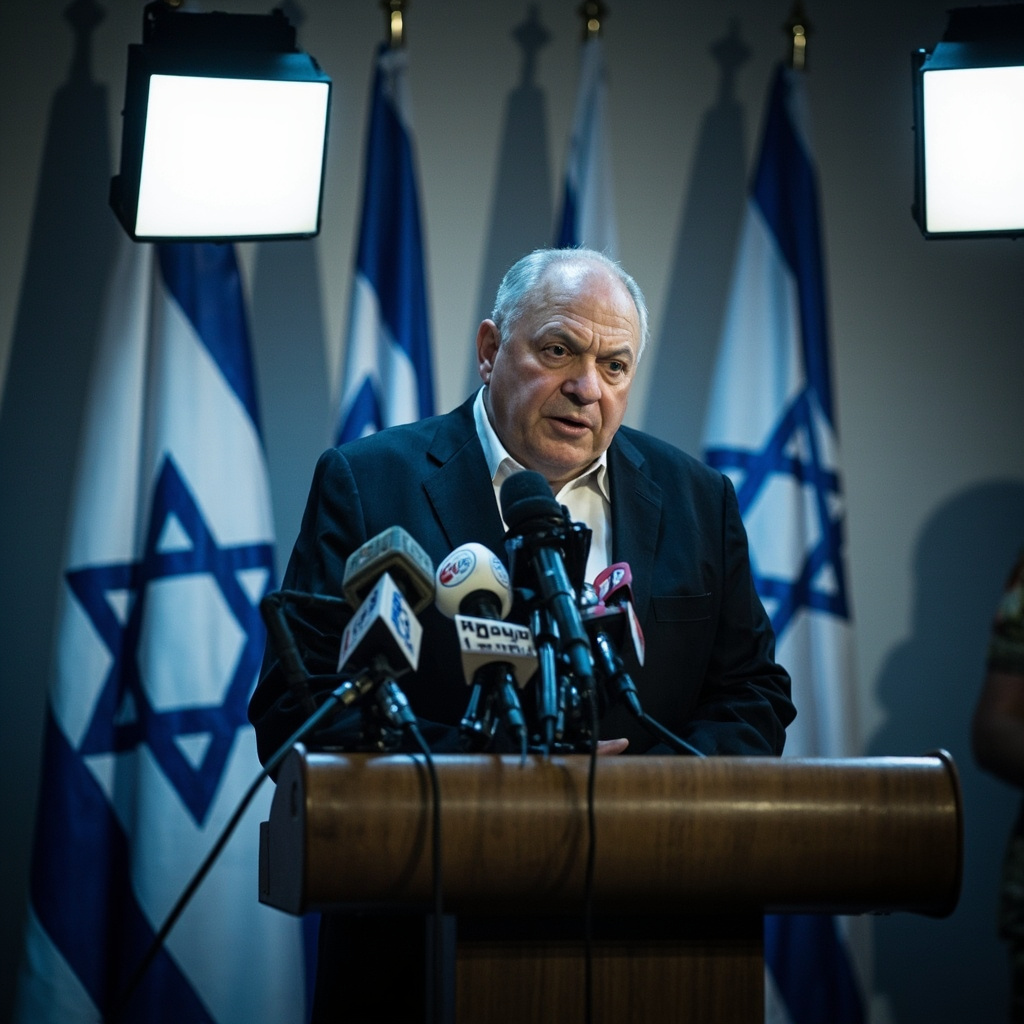
Israeli Defense Minister Israel Katz said Thursday that President Donald Trump’s decision to link the Iran and Lebanon fronts prevented Israel from fully collapsing Hezbollah during its military campaign in Lebanon, forcing Jerusalem to scale back operations under a US-backed ceasefire framework.
Katz told reporters in Tel Aviv that Israeli forces were on the verge of achieving Hezbollah’s total defeat when Washington intervened to tie the Lebanon ceasefire to broader negotiations with Tehran. “At that time, we were attacking all of Lebanon,” Katz said. “I’m sorry for that connection, but it was an American interest. Trump really, really wanted to promote the possibility of negotiations with Iran, and he saw our operations in Lebanon as an obstacle to it.”
Trump Pressure Forced Operational Changes
According to Katz, Prime Minister Benjamin Netanyahu resisted repeated US requests to scale back the offensive through four direct phone calls with Trump. “Netanyahu stood bravely against those demands,” Katz said, adding that the prime minister eventually accepted restrictions on Beirut strikes in exchange for preserving the broader US partnership. Netanyahu agreed not to “take down buildings” in the Lebanese capital but insisted on continuing surgical targeted attacks, Katz said. The defense minister said he opposed that concession and warned it would allow Hezbollah to reconstitute its capabilities.
The comments offer a rare public account from a senior Israeli official detailing how US diplomatic pressure directly shaped Israel’s military operations during the weeks-long campaign. Katz alleged that Iran actively encouraged Washington to press Jerusalem to halt its offensive. “Iran constantly pressured the United States to pressure Israel, in order to stop this,” he said. “Hezbollah, in a panic, pressured Iran to connect the arenas, linking the Lebanon front with the ceasefire talks.”
IDF to Remain Until Hezbollah Disarms
Under the ceasefire framework brokered by the United States, Israeli forces may remain in southern Lebanon until Hezbollah is fully disarmed. Katz said the IDF is prepared for a long-term presence. “We will not withdraw from any additional positions in Lebanon until Hezbollah disarms,” he said. “The IDF will stay as long as necessary to ensure this happens.” The defense minister also left the door open to resumed fighting with Iran, saying combat could resume if Trump orders it or if Tehran launches new missile attacks.
Israeli military analysts have noted that Hezbollah’s command structure remains largely intact despite the campaign, raising questions about whether the group can be forced to disarm without a full-scale reoccupation. Regional observers say the ceasefire framework has created a precarious equilibrium. Hezbollah has publicly maintained it will not surrender its weapons, while Israel has vowed to use force if diplomacy fails. The United Nations Interim Force in Lebanon (UNIFIL) has reported repeated violations on both sides since the ceasefire took effect.
Diplomatic Fallout and What Comes Next
The Katz revelations have renewed scrutiny of Trump’s Middle East strategy. Critics in Jerusalem argue the administration prioritized a potential nuclear deal with Iran over Israel’s security, while US officials have defended the approach as necessary to prevent a broader regional war. Qatari-mediated talks between the United States and Iran are expected to resume in Doha this week. Iranian officials have insisted that any final agreement must include a permanent end to Israeli operations in Lebanon and the release of Iranian funds frozen under US sanctions.
Tehran has rejected third-party mediation, saying direct negotiations with Washington are the only acceptable path. French President Emmanuel Macron spoke separately with Netanyahu and Lebanese Parliament Speaker Nabih Berri on Thursday, urging both sides to avoid provocative actions that could unravel the ceasefire. The Élysée Palace said Macron emphasized the importance of full implementation of UN Security Council Resolution 1701, which ended the 2006 Lebanon war and forms the basis of the current framework.
What to watch: The Doha talks will be the central test of whether the ceasefire holds. Any indication that Israel plans to expand operations in Lebanon, or that Iran is moving toward a resumption of hostilities, is likely to bring immediate international pressure. Katz is scheduled to brief the Knesset Foreign Affairs and Defense Committee next week on the operational assessments underpinning Israel’s position. European diplomatic sources said they expect a preliminary readout from the Doha round by Friday, which will determine whether a second round of talks is warranted.