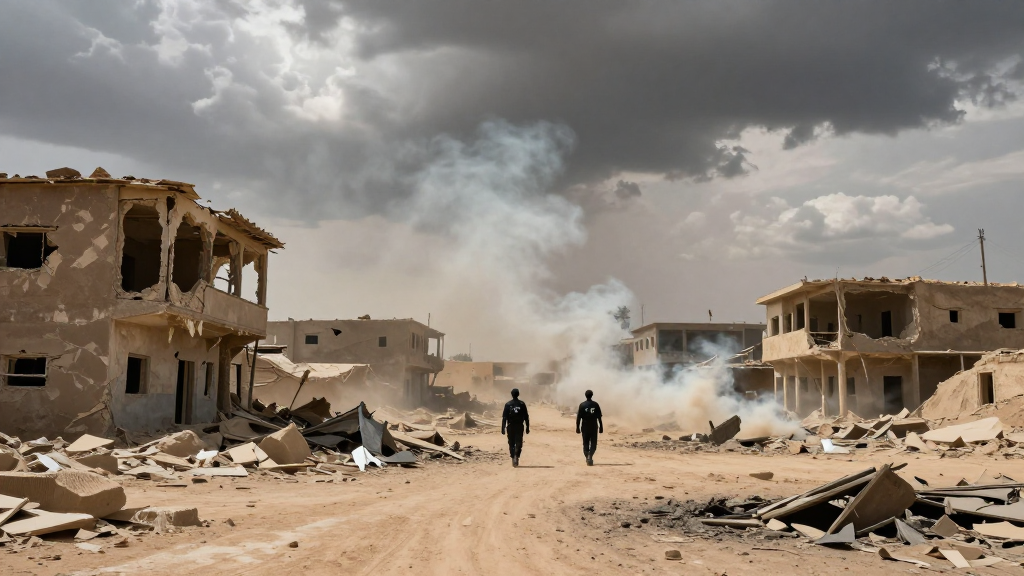
DAKAR, Senegal — Africa’s regional security architecture is fracturing along multiple fault lines, as the G5 Sahel framework verges on complete collapse, xenophobic violence displaces thousands in Southern Africa, and parallel political crises deepen across every region of the continent.
West Africa: G5 Sahel on the Brink of Collapse
Mali and Niger have formally notified the G5 Sahel secretariat of their withdrawal from the regional security framework, leaving Chad as the framework’s sole remaining member. The dual withdrawal, effective immediately, renders the organization that was once championed as Africa’s answer to jihadist insurgencies functionally defunct.
The breakaway marks a decisive pivot for both military governments, which have deepened ties with Russia and expelled French forces from their territories. “The framework no longer reflects our strategic reality,” Mali’s foreign minister said in a statement. More than 10 million people have been displaced across Mali, Niger, and Burkina Faso as jihadist groups exploit governance vacuums.
France, which had stationed thousands of troops across the Sahel under Operation Barkhane before its phased withdrawal, has now been largely sidelined from the region. Russia’s influence has expanded in parallel, with military advisors and private security contractors operating openly in all three countries.
Southern Africa: South Africa’s Anti-Migrant Crisis Deepens
South Africa is experiencing a humanitarian crisis born of xenophobic violence, as waves of attacks against foreign nationals have forced more than 1,000 people to flee their homes each day. The United Nations High Commissioner for Refugees warned that the situation is “spiraling beyond the capacity of civil society to manage.”
President Cyril Ramaphosa’s government has deployed the military to several townships, but the presence of armed forces has done little to stem the violence. Community vigilante groups have established roadblocks and issued eviction threats against migrants from Nigeria, Zimbabwe, Mozambique, and other neighboring countries.
The economic root cause is difficult to dispute: South Africa’s unemployment rate has surpassed 35 percent, and migrants are frequently blamed by local communities for straining already-limited public resources. At least 42 people have been killed since the violence escalated, according to the South African Human Rights Commission.
East Africa: Kenya and Uganda in Political Crackdown
Kenyan Gen Z protesters returned to the streets on the second anniversary of the youth-led uprising that briefly toppled the government, confronting riot police who deployed tear gas and rubber bullets. The anniversary demonstrations drew tens of thousands of participants who called for deeper reforms than those enacted after last year’s political upheaval.
In Uganda, President Yoweri Museveni’s government moved to silence independent media outlets covering the ongoing political confrontation, banning two major newspapers and imposing a social media blackout across the capital. The Committee to Protect Journalists condemned the crackdown as “an assault on the public’s right to information at a moment of acute national tension.”
North Africa: Sudan War Death Toll Rises, Libya Fragments Further
North Africa remains consumed by two overlapping catastrophes. In Sudan, the war between the Sudanese Armed Forces and the Rapid Support Forces has killed more than 1,500 people and displaced nearly 10 million since April, according to the UN Office for the Coordination of Humanitarian Affairs. Both factions have been accused of targeting civilian infrastructure, and the UN human rights chief warned that actions by both sides may constitute war crimes.
In Libya, the ongoing fragmentation of the state — a consequence of the 2011 NATO-backed uprising that ousted Muammar Gaddafi — has created a permissive environment for weapons flows and mercenary activity across the Sahel. Armed groups aligned with both of Libya’s competing governments have been documented providing direct support to RSF operations in Sudan.
Central Africa: Regional Spillover Fears Mount
The collapse of the G5 Sahel has immediate consequences for Central Africa, where jihadist groups have shown a capacity to exploit the power vacuum left by the withdrawal of French and Western security assistance. Chad, now the framework’s sole remaining member, has limited capacity to project force across the vast Sahel corridor without external support.
Regional bodies including ECOWAS and the African Union are under mounting pressure to convene an emergency summit to address both the security vacuum created by the G5 Sahel collapse and the simultaneous crises erupting across every other region of the continent.