Thursday, July 9, 2026
News

China Fires Submarine Missile in Pacific Waters as Penny Wong and Winston Peters Respond

China Fires Submarine-Launched Ballistic Missile in Pacific Waters

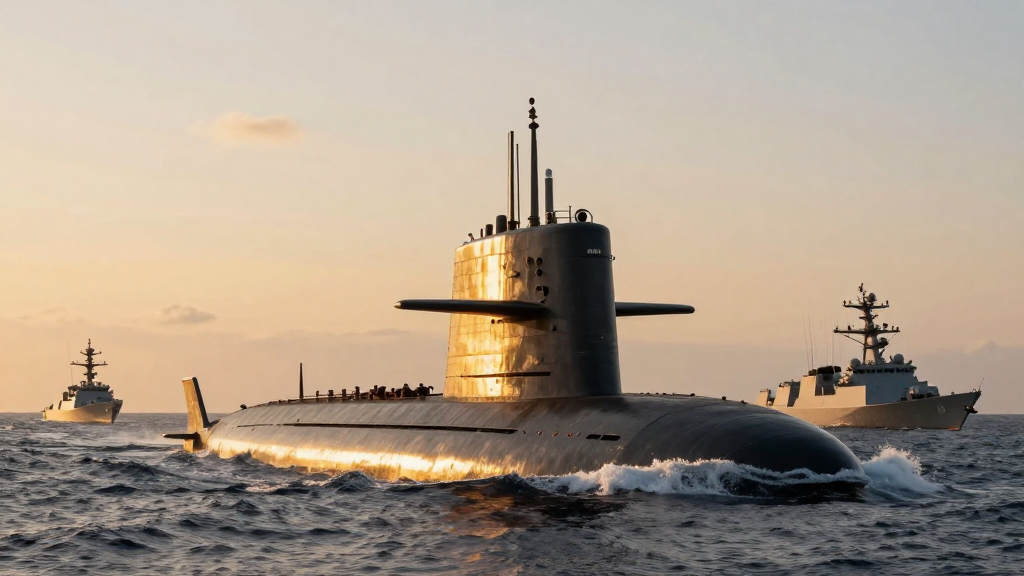
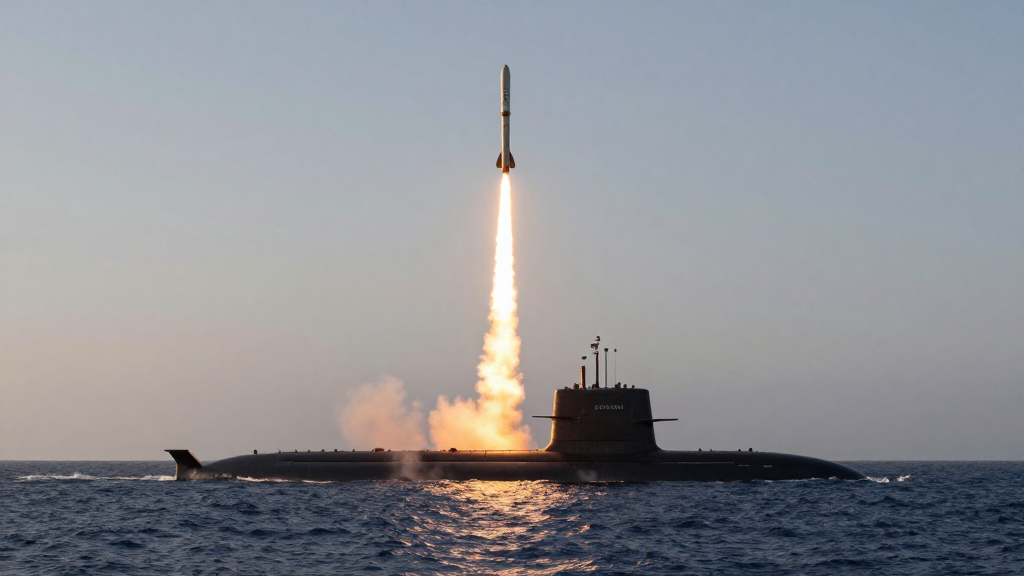
The Chinese navy test-launched a long-range ballistic missile from a nuclear-powered submarine at 12:01pm GMT on Monday, striking designated waters in the South Pacific, according to Xinhua. The test — the first of its kind publicly disclosed by Beijing in years — drew swift condemnation from Australia, New Zealand, and Japan, all of whom described the launch as a destabilizing escalation in an already tense region.

Australian Foreign Minister Penny Wong confirmed that China had provided advance notification of the planned sea-based missile test but said the action remained deeply concerning. “Australia has been clear that this proposed test is in the context of a rapid military build-up by China, which is lacking in the transparency and reassurance as to intent that the region expects,” Wong told reporters in Suva, the Fijian capital.

New Zealand’s government, which received word of the launch within hours of it occurring, was equally blunt. “New Zealand considers this an unwelcome and concerning development. We, like our neighbours in other Pacific countries, have no interest in China using the South Pacific as a testing site for missile capability,” Foreign Minister Winston Peters said in an official statement.

Japan Raises Alarm Over Regional Safety Implications

Japan’s government said it had been notified by Chinese authorities about the missile launch and had urged Beijing to reconsider the test. “We expressed our grave concern over the Chinese military’s increased activity,” the government said in a statement, adding that Japan’s coast guard had separately received warnings about falling space debris that could land within Japan’s exclusive economic zone.

The test comes as Japan’s Self-Defense Forces have accelerated joint exercises with the United States and regional partners, including a recent live-fire missile exercise conducted alongside Philippine forces during the annual Balikatan drills. Japanese defense officials have privately told reporters that the submarine-based launch demonstrated a significant advance in China’s ability to project strategic nuclear power from outside its immediate coastal waters.

Regional security analysts say the test is consistent with a pattern of China’s rapidly expanding undersea nuclear deterrent, which now includes a new class of ballistic missile submarines capable of launching from the South China Sea, the East China Sea, and open Pacific waters beyond the first island chain.

US Calls for Arms Control Dialogue; Beijing Defends Test as Routine

The United States urged China to engage in formal arms control discussions and commit to regularized notification procedures for intercontinental-range ballistic missile and space launches. “The United States calls on the PRC to engage in meaningful arms control discussions and commit to a regularized notification arrangement for all intercontinental-range ballistic missile and space launches,” the State Department said in a statement.

Xinhua, meanwhile, described the launch as a “routine arrangement” of China’s annual military training schedule and said it was not directed at any specific country or target. Beijing’s defense ministry has not yet issued a separate public statement responding to the criticism from regional partners.

The missile test is likely to feature prominently at the upcoming ASEAN Regional Forum in Kuala Lumpur, where several Southeast Asian defense ministers have said they will raise concerns about great-power competition in the South China Sea and the broader Pacific. The test also underscores the accelerating arms competition between the United States and China in the western Pacific, where both sides have expanded naval and air operations significantly over the past two years.

Regional analysts say the timing of the test — coming amid ongoing diplomatic efforts to stabilize US-China relations — complicates efforts to restore confidence between the two superpowers. One senior diplomat in the region, speaking on background, said the launch “makes it harder to keep the channels of communication open when one side is demonstrating this kind of capability without warning.” The test will likely feature prominently in upcoming bilateral consultations between Beijing and Washington, as well as in talks among the five members of the AUKUS security partnership.
Kenji T.

Kenji Tanaka covers Japan, the Philippines, Southeast Asia and the broader Indo-Pacific region from New Delhi.

News

China Fires Submarine-Launched Ballistic Missile in Pacific Waters

China Fires Submarine-Launched Ballistic Missile in Pacific Waters

The Chinese navy test-launched a long-range ballistic missile from a nuclear-powered submarine at 12:01pm GMT on Monday, striking designated waters in the South Pacific, according to Xinhua. The test — the first of its kind publicly disclosed by Beijing in years — drew swift condemnation from Australia, New Zealand, and Japan, all of whom described the launch as a destabilizing escalation in an already tense region.

Australian Foreign Minister Penny Wong confirmed that China had provided advance notification of the planned sea-based missile test but said the action remained deeply concerning. “Australia has been clear that this proposed test is in the context of a rapid military build-up by China, which is lacking in the transparency and reassurance as to intent that the region expects,” Wong told reporters in Suva, the Fijian capital.

New Zealand’s government, which received word of the launch within hours of it occurring, was equally blunt. “New Zealand considers this an unwelcome and concerning development. We, like our neighbours in other Pacific countries, have no interest in China using the South Pacific as a testing site for missile capability,” Foreign Minister Winston Peters said in an official statement.

Japan Raises Alarm Over Regional Safety Implications

Japan’s government said it had been notified by Chinese authorities about the missile launch and had urged Beijing to reconsider the test. “We expressed our grave concern over the Chinese military’s increased activity,” the government said in a statement, adding that Japan’s coast guard had separately received warnings about falling space debris that could land within Japan’s exclusive economic zone.

The test comes as Japan’s Self-Defense Forces have accelerated joint exercises with the United States and regional partners, including a recent live-fire missile exercise conducted alongside Philippine forces during the annual Balikatan drills. Japanese defense officials have privately told reporters that the submarine-based launch demonstrated a significant advance in China’s ability to project strategic nuclear power from outside its immediate coastal waters.

Regional security analysts say the test is consistent with a pattern of China’s rapidly expanding undersea nuclear deterrent, which now includes a new class of ballistic missile submarines capable of launching from the South China Sea, the East China Sea, and open Pacific waters beyond the first island chain.

US Calls for Arms Control Dialogue; Beijing Defends Test as Routine

The United States urged China to engage in formal arms control discussions and commit to regularized notification procedures for intercontinental-range ballistic missile and space launches. “The United States calls on the PRC to engage in meaningful arms control discussions and commit to a regularized notification arrangement for all intercontinental-range ballistic missile and space launches,” the State Department said in a statement.

Xinhua, meanwhile, described the launch as a “routine arrangement” of China’s annual military training schedule and said it was not directed at any specific country or target. Beijing’s defense ministry has not yet issued a separate public statement responding to the criticism from regional partners.

The missile test is likely to feature prominently at the upcoming ASEAN Regional Forum in Kuala Lumpur, where several Southeast Asian defense ministers have said they will raise concerns about great-power competition in the South China Sea and the broader Pacific. The test also underscores the accelerating arms competition between the United States and China in the western Pacific, where both sides have expanded naval and air operations significantly over the past two years.

The missile test is likely to feature prominently at the upcoming ASEAN Regional Forum in Kuala Lumpur, where several Southeast Asian defense ministers have said they will raise concerns about great-power competition in the South China Sea and the broader Pacific. The test also underscores the accelerating arms competition between the United States and China in the western Pacific, where both sides have expanded naval and air operations significantly over the past two years.

Kenji T.

Kenji Tanaka covers Japan, the Philippines, Southeast Asia and the broader Indo-Pacific region from New Delhi.