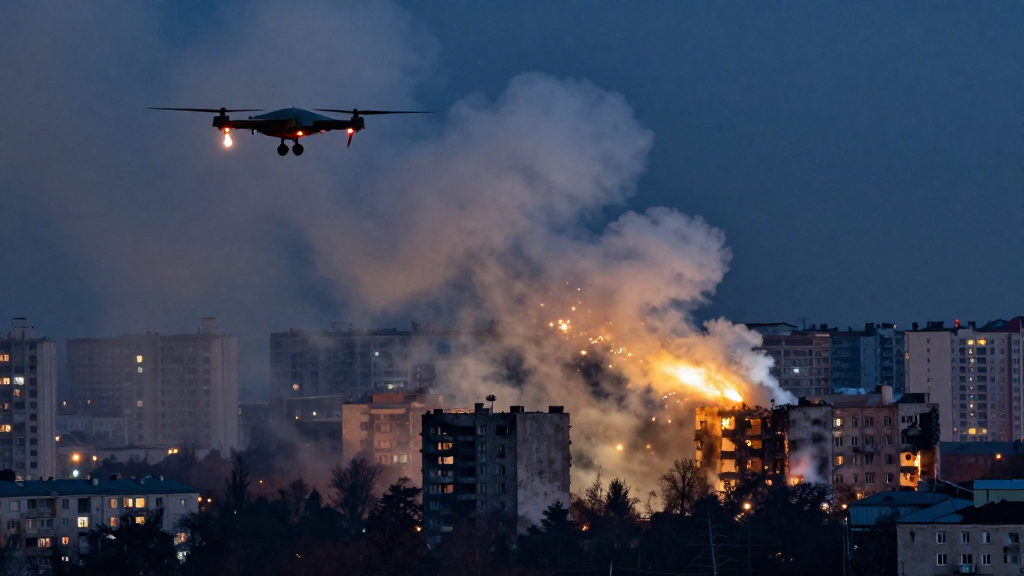
ANKARA, Turkey — The United States launched a fresh wave of military strikes against Iran on Wednesday after President Donald Trump declared the four-month-old ceasefire over, reigniting a conflict that has disrupted global energy markets and drawn sharp concern from allied governments across Europe and the Gulf.
The White House confirmed the strikes, saying they were authorized following Iranian attacks on commercial vessels transiting the Strait of Hormuz. Within hours, Iran launched retaliatory strikes against Bahrain and Kuwait, according to officials in those countries, heightening fears of a broader regional escalation.
Trump Declares Ceasefire Dead at NATO Summit
Trump made the announcement alongside NATO Secretary-General Mark Rutte at the alliance summit in Ankara. The Trump administration has grown increasingly frustrated that NATO members did not join the original US military campaign against Iran launched in March.
The ceasefire is over. Iran chose escalation over diplomacy, and the United States will respond accordingly, Trump told reporters at the Presidential Complex.
US officials, speaking on condition of anonymity because they were not authorized to discuss ongoing operations publicly, said the overnight strikes targeted more than 30 sites across Iran, including radar installations, missile batteries, and command-and-control facilities.
Iran Hits Back at Gulf Partners as Nuclear Site Hit
Iran Islamic Revolutionary Guard Corps confirmed the US strikes and said the country armed forces were placed on full combat alert. Iran deputy governor of Bushehr province told state media that a US projectile struck the area surrounding Iran Bushehr nuclear power plant, though officials insisted the facility itself was not damaged. The International Atomic Energy Agency said it was deeply concerned and demanded access to assess any radiological impact.
Within 24 hours of the US strikes, Iran launched its own attacks. Bahrain Interior Ministry said an Iranian missile struck a military installation near Manama. Kuwait defense ministry reported a similar strike on a facility in its northern desert region. Qatar said its air defenses intercepted an incoming projectile.
Strait of Hormuz Shipping at Near-Standstill
Shipping sources tracking traffic through the Strait of Hormuz told Reuters that vessel movements had slowed to a trickle, with major insurers effectively suspending coverage for tankers transiting the waterway. The strait handles roughly one-fifth of the world oil shipments, and analysts warned that prolonged disruption could push Brent crude above 120 dollars per barrel within weeks.
Defense Secretary Pete Hegseth, speaking from the Pentagon, said the US would protect the right of innocent passage and warned Iran against further provocations.
Trump Threatens European Troop Withdrawal Over Alliance Tensions
Trump used the Ankara summit to renew pressure on NATO allies, suggesting the United States might reduce its troop presence in Europe depending on how European governments responded to the Iran conflict.
When they had a chance, an opportunity to help, they chose not to, Trump said, referring to European nations that declined to join the initial US strikes. The remark was interpreted by European officials as a renewed warning that the US troop footprint on the continent could be reconsidered.
NATO Secretary-General Rutte sought to play down the tensions, saying the alliance remained unified on its core mission. Several European defense ministers said they were focused on the Iran situation and had no indication of imminent changes to US force posture in Europe.
What comes next: Pentagon officials said additional US military assets were being repositioned to the Gulf region. Secretary of State Marco Rubio was expected to brief NATO foreign ministers by video link on Thursday evening.