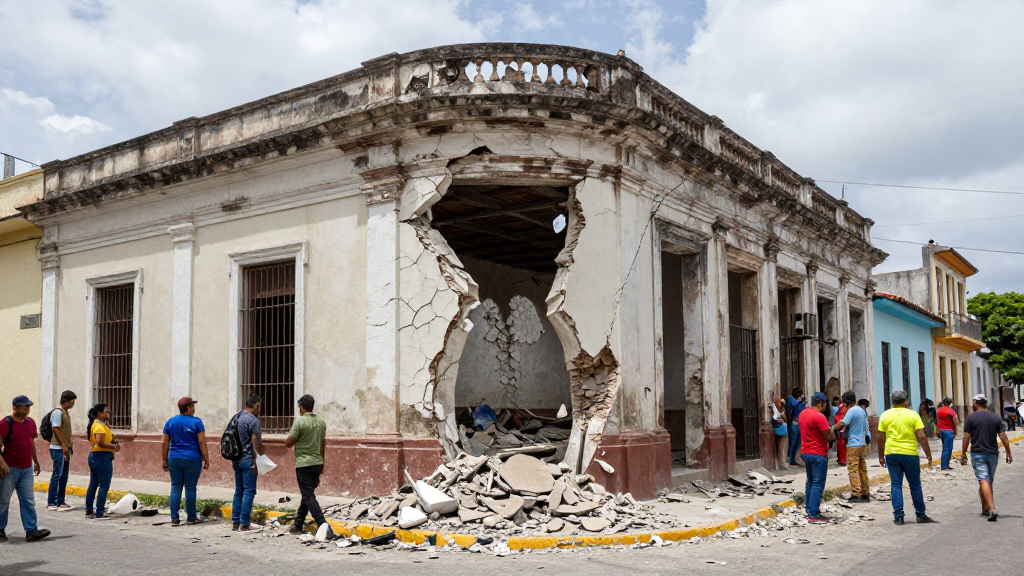
Caracas, June 27 (Reuters) — The death toll from Venezuela’s devastating twin earthquakes rose above 1,400 on Saturday as foreign rescue teams poured into the country and authorities pressed on with the search for survivors in the hardest-hit coastal areas of La Guaira.
Foreign Rescuers Join the Hunt as Window for Survivors Narrows
More than 1,600 foreign rescuers had arrived by Saturday, with additional teams on the way, according to officials. In Caraballeda, one of the worst-hit districts of La Guaira, U.S. helicopters ferried rescue teams into a dusty landing zone, dropping off crews before taking off again.
Among the volunteers was Alejandro Serrano, a 33-year-old industrial engineer who traveled from San Cristobal in western Venezuela searching for his 24-year-old sister, Ana, who lived in the Bahía Mar building in Caraballeda, which was destroyed. “I hope they don’t find her” in the rubble, he said — meaning he hoped she was still alive. “But I need to find her.”
Residents Sleep in the Streets as Aftershocks Shake Trauma-Prone Neighborhoods
Residents across La Guaira described a disjointed official response. “Since the night of the earthquakes, almost all the neighbors have been sleeping in the street because of the aftershocks,” said Beisy Rivas, 60, from the Los Corales area. “My nerves are on edge, thinking about the dead and about the people who lost relatives.”
The U.S. Geological Survey estimated that more than 10,000 deaths were possible from the magnitude 7.2 and 7.5 quakes — which would place them among Latin America’s deadliest natural disasters of the last century. More than 55,000 people are listed as unaccounted for on a website promoted by the opposition.
International Aid Arrives as Political Fallout Looms for Interim Government
A senior U.S. administration official said a funding package worth hundreds of millions of dollars was expected within days, on top of $150 million already committed by the Trump administration. Pope Leo, speaking in Rome, offered prayers for the victims and those involved in relief operations.
The twin quakes struck on Wednesday, unleashing hundreds of aftershocks that kept entire neighborhoods sleeping outdoors. Power throughout the region was gradually returning, though Venezuela’s grid — crippled by years of underinvestment — regularly experiences problems.
Relief workers described resilience alongside tragedy. At a makeshift morgue in La Guaira’s central sports stadium, body bags lined the perimeter of a basketball court. Volunteers from the Venezuelan Red Cross said they had registered more than 8,000 displaced persons across shelters in schools and community centers.
The disaster carries political risk for interim President Delcy Rodriguez, who has portrayed herself as an agent of change despite serving as vice president under Nicolas Maduro. A White House official told Reuters that opposition leader Maria Corina Machado’s renewed push for U.S. help to return home was frustrating senior officials in Washington, who said it was too soon after the disaster to pursue such discussions.
International organizations have issued urgent appeals. The International Federation of Red Cross and Red Crescent Societies said Saturday it was releasing emergency funds and deploying additional specialists, while the Pan American Health Organization warned of the risk of waterborne disease outbreaks in areas where sewage systems were damaged. The U.S. Geological Survey placed the potential economic cost of the disaster at up to $8 billion — a figure that would compound Venezuela’s already strained recovery from years of political and economic crisis.
The international response has drawn assets from more than a dozen countries. Among the first to arrive were rescue crews from Argentina, Chile, and Colombia, who set up triage stations in open-air parking lots converted into makeshift command centers. Teams from China and Russia also arrived, underscoring the geopolitical dimensions of the disaster as multiple foreign powers position themselves alongside the interim government in Caracas.
Civilian volunteers without credentials found themselves blocked at checkpoints as authorities enforced strict perimeter controls around La Guaira, citing the need to prioritize emergency vehicles. At a makeshift morgue in La Guaira’s central sports stadium, body bags lined the perimeter of a basketball court as forensic teams worked to identify the dead. Volunteers from the Venezuelan Red Cross said they had registered more than 8,000 displaced persons across temporary shelters set up in schools and community centers. As rescue operations entered their sixth day, aid workers warned that the window for finding survivors was narrowing sharply, with every hour bringing diminishing returns for the search teams still combing the rubble of the coastal city.
Whether the international aid surge arrives in time to shift the outcome for the thousands still missing remains the defining question facing Venezuela as it confronts the deadliest natural disaster in its modern history.