Labor Market Cools But Holds Ground
The U.S. economy added 175,000 nonfarm payrolls in June 2026, according to the Bureau of Labor Statistics Employment Situation Summary released Thursday. The headline figure came in slightly below economist forecasts of 185,000, signaling a gradual deceleration in labor market momentum after a blockbuster first quarter. The unemployment rate held steady at 4.3 percent for the third consecutive month, reflecting continued resilience even as hiring activity moderates across multiple sectors. Average hourly earnings rose 0.2 percent month-over-month and 3.8 percent year-over-year, suggesting wage growth remains firm but is not accelerating at a pace that would alarmed Federal Reserve policymakers. The labor force participation rate edged up slightly to 62.4 percent, providing additional capacity to absorb demand without sparking runaway wage inflation.
“The June report is consistent with an economy that is cooling but not collapsing,” said Kevin Thompson, chief economist at Meridian Capital Research. “Payroll growth has clearly decelerated from the pace we saw in the first quarter, but the unemployment rate holding at 4.3 percent means we are still at or near full employment by historical standards.” The professional and business services sector contributed 52,000 new positions, while healthcare and social assistance added 48,000 jobs. Retail trade shed 18,000 positions, its fourth consecutive monthly decline, as consumer spending patterns continue to shift toward services and away from goods. Manufacturing employment was essentially flat, adding just 3,000 jobs as the sector grapples with lingering supply chain adjustments and cooling export demand.
Federal Reserve Holds Steady as Inflation Battle Continues
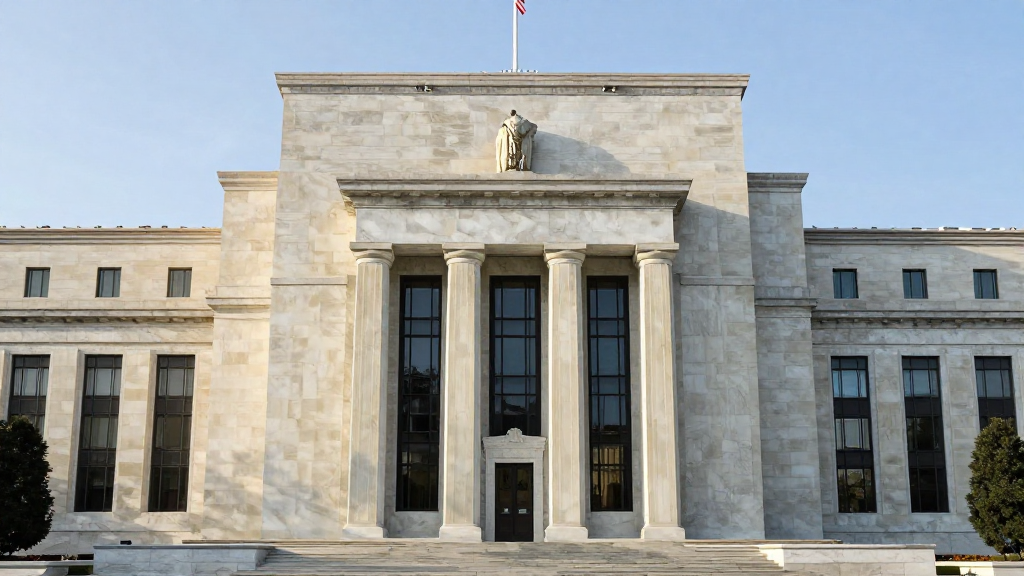
The Federal Open Market Committee voted unanimously to hold the federal funds rate in the 5.25 to 5.50 percent target range at its July meeting, a decision that came just days after the June employment report added context to the central bank is ongoing effort to bring inflation fully back to its 2 percent target. The Fed is has maintained rates at their current level since July 2023, the most restrictive monetary policy stance since the early 2000s. Fed Governor Michelle Warsh told reporters at the post-meeting press conference that the June payrolls figure gives policymakers additional confidence that inflation pressures are gradually easing without a sharp deterioration in labor market conditions. Her remarks were notably more dovish than her February testimony, when she had warned that the Fed could not declare victory on inflation with core prices still running above 3 percent annually.
The Personal Consumption Expenditures price index, the Fed is preferred inflation gauge, rose 2.6 percent year-over-year in May, down from a peak of 7.1 percent in 2022 but still comfortably above the central bank is 2 percent goal. Core PCE, which excludes volatile food and energy prices, registered 2.8 percent annually. Financial markets now price in roughly a 65 percent probability of a rate cut at the September FOMC meeting, according to the CME FedWatch Tool, down from near certainty earlier in the year. The yield on the 2-year Treasury note, which is highly sensitive to near-term Fed expectations, fell 8 basis points on the jobs report before recovering to end the week at 4.71 percent. Equity markets responded positively to the data, with the S&P 500 gaining 0.9 percent on the session as investors interpreted slower job growth as a sign the Fed has room to ease monetary policy before causing meaningful economic harm.
Inflation Pressures Ease Across Multiple Measures
The Consumer Price Index rose 3.0 percent year-over-year in May, its lowest reading since March 2021, according to the Bureau of Labor Statistics. Shelter inflation, which has been the most persistent component of the CPI basket, finally showed meaningful deceleration, with owners equivalent rent rising 4.6 percent annually compared to 6.5 percent a year earlier. Energy prices declined 3.2 percent over the 12-month period, providing relief to household budgets that had been squeezed by gasoline and utility costs. Food prices increased 2.1 percent year-over-year, the smallest gain since late 2020. Goods prices overall were down 0.4 percent from a year earlier, reflecting normalization of supply chains and cooling demand for durable goods that had surged during the pandemic era.
“The disinflation narrative is firmly intact, but the last mile is always the hardest,” said Dr. Sarah Chen, senior fellow at the Peterson Institute for International Economics. “Getting from 2.8 percent core PCE down to 2 percent requires either a meaningful softening in the labor market or an extended period of steady-but-moderate growth where supply and demand in labor markets continue to rebalance. The Fed is walking a very fine line.” Producer prices tell a similar story of gradual moderation, with the Producer Price Index for final demand rising 2.2 percent year-over-year in May. Healthcare services inflation remains elevated at 3.4 percent annually, partly reflecting an aging population and continued consolidation in the hospital and insurance industries. Financial conditions have eased modestly in recent months as equity markets rallied and credit spreads tightened, which could provide additional support for consumer spending in the second half of the year.
Markets and Economists React to Mixed Signals
The reaction across asset classes reflected the nuanced nature of the data, with equity investors focusing on the positive implications for future Fed easing while bond investors weighed the persistent gap between current inflation and the central bank is target. The Nasdaq Composite outperformed major indices with a 1.4 percent gain, led by rate-sensitive sectors including real estate investment trusts and utilities. The dollar index fell 0.6 percent against a basket of major currencies, reflecting expectations of relatively lower U.S. interest rates compared to peer economies. Gold rose $28 per troy ounce to $2,387, as some investors sought the traditional safe-haven asset amid uncertainty about the pace of monetary policy normalization.
“The Fed has effectively paused, but the question is what happens next,” said Marcus Rodriguez, head of fixed income strategy at Pacific Rim Asset Management. “If the economy continues to cool at this pace, we will likely see the first cut in September or November. But if inflation stalls above 2.5 percent while growth remains positive, the Fed could be forced to hold well into 2027, which would be a significant market event.” Consumer confidence dipped slightly in June according to the Conference Board, falling to 103.4 from 105.7 in May, as respondents expressed greater concern about the outlook for business conditions and employment over the next six months. Small business optimism, however, improved for the second consecutive month according to the National Federation of Independent Business, with owners citing reduced uncertainty about tax and regulatory policy as a key driver of improved sentiment.
Regional labor market data reveals continued divergence in economic conditions across the country. The Mountain West and South Central regions continued to lead job creation, with Texas, Arizona, and Colorado accounting for a disproportionate share of national employment growth. Meanwhile, parts of the Northeast and Midwest continued to experience above-average unemployment rates, reflecting ongoing structural adjustments in manufacturing and technology sectors. The housing market remained a mixed picture, with existing home sales declining 1.8 percent in May as affordability constraints and limited inventory kept many prospective buyers on the sidelines. New home construction showed more resilience, with housing starts rising 3.2 percent month-over-month as builders responded to continued demand for single-family homes in Sun Belt metros. Mortgage rates averaged 6.89 percent for a 30-year fixed loan according to Freddie Mac, putting continued pressure on first-time buyers who face both elevated borrowing costs and persistent inventory shortages in the entry-level segment of the market.