ANKARA, Turkey — President Donald Trump declared the United States-Iran ceasefire “over” on Wednesday and announced fresh military strikes against Iranian military infrastructure, marking a decisive rupture in the fragile diplomatic truce that had held since mid-June. The escalation came as Iran held funeral ceremonies for slain Supreme Leader Ayatollah Ali Khamenei in Mashhad, with his successor, Mojtaba Khamenei, still absent from public view. The combination of ongoing hostilities and leadership uncertainty has pushed the broader Middle East toward a precarious new chapter.
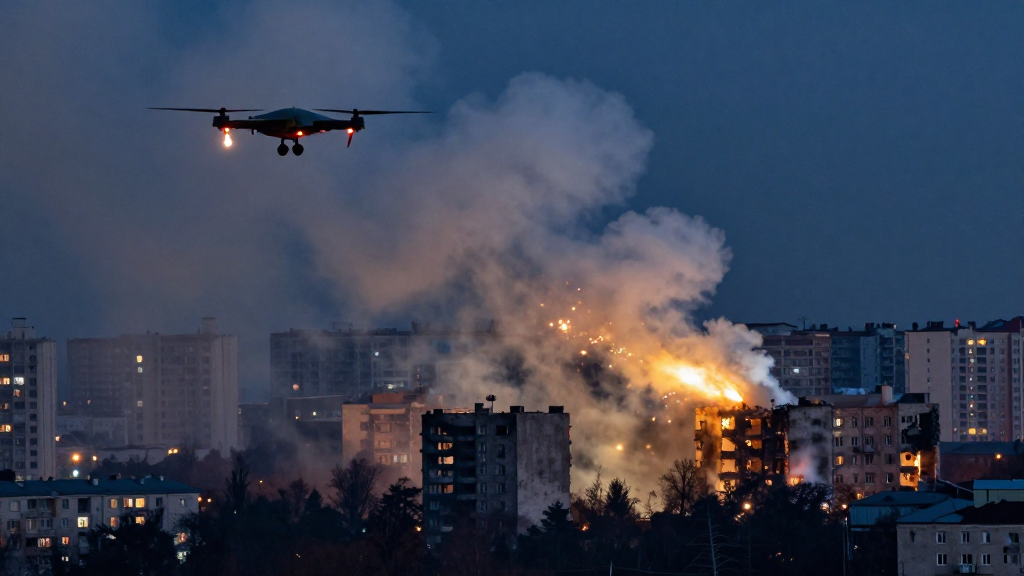
The collapse of the ceasefire followed Iranian attacks on commercial vessels transiting the Strait of Hormuz, a vital global oil corridor through which roughly a fifth of the world’s oil shipments pass. US Central Command confirmed that American forces launched a new wave of strikes against Iranian military targets across southern and southeastern Iran on Tuesday and Wednesday, striking more than 80 sites. Explosions were reported near Kharg Island, a key oil export hub, as well as Bandar Abbas, Sirik, and Qeshm Island. Iranian state media also reported strikes near the perimeter of the Bushehr civilian nuclear power plant, which sits on the outskirts of Bushehr city in southern Iran.
Diplomatic Front Collapses as Hormuz Tensions Spread
Trump discussed security concerns around the Strait of Hormuz with NATO Secretary General Mark Rutte on the sidelines of the alliance summit in Ankara on Wednesday, underscoring the geopolitical stakes of the maritime standoff. Iran’s chief negotiator, Parliament Speaker Bagher Ghalibaf, insisted the strategic waterway would reopen only under what he described as “Iranian arrangements,” signaling that Tehran intends to retain significant control over commercial shipping despite mounting international pressure. Washington and Gulf Arab states maintain that freedom of navigation through international straits cannot be conditioned on Iranian approval. Maritime tracking data from firm Kpler showed traffic through the strait had fallen sharply since Wednesday, particularly through the UN-backed Omani route, after vessels were attacked earlier this week.
A senior US official told reporters on Thursday that technical talks on Iran’s nuclear programme continue, though the diplomatic channel has narrowed significantly. “The United States is still committed to finding a resolution, and technical talks continue. Iran can never possess a nuclear weapon,” the official said. The official added that the June memorandum of understanding was “performance-based” and that Iran’s Hormuz attacks “constitute failed performance at an unacceptable level.” Oil prices surged following the announcement of the new strikes, with Brent crude climbing more than 4 percent in early Asian trading on Thursday, reflecting investor concerns about disruption to supplies moving through the strait.
Iranian Retaliation Targets Gulf Allies
Iran’s military responded to the American strikes with its own attacks targeting US assets across the Gulf region. Tehran said it struck a Patriot missile interceptor system in Kuwait, an early warning system in Qatar, and fuel storage facilities in Bahrain using drones. The Iranian army confirmed the strikes in a statement carried by state media. A US defense official said the volleys of missiles and drones were either intercepted by allied air defenses or caused no significant damage, and that no American personnel were injured. Sirens sounded in Jordan, a US ally, where the military said it intercepted eight missiles launched from Iranian territory. Jordan’s armed forces said in a statement that all incoming projectiles had been brought down and no casualties were reported on Jordanian soil.
Defense Minister Israel Katz warned at a military ceremony in Tel Aviv that Israel stood prepared to attack Iran for a “third time” if necessary, following wars against Tehran in June 2025 and February 2026. “We are preparing for every scenario,” Katz said, adding that any future Israeli operation would be conducted “with even greater force.” Prime Minister Benjamin Netanyahu echoed that assessment, saying Israel was watching the situation closely. Senior Israeli officials have repeatedly stated that a nuclear-capable Iran remains a red line, and Defense Minister Katz’s remarks at the military ceremony made clear that Tel Aviv views the current moment as a potential trigger point for renewed hostilities.
Khamenei Burial Overshadowed by Escalation
The military confrontation unfolded against the backdrop of Iran’s elaborate funeral rites for Khamenei, who was killed alongside close family members in a US-Israeli airstrike on February 28. Over the past week, waves of mourners loyal to the Islamic Republic massed in cities across Iran to pay respects, with the final procession ending in Khamenei’s burial in his hometown of Mashhad on Thursday evening. His coffin was transferred by helicopter to the Imam Reza shrine for the ceremony. State media displayed images of senior Iranian officials, including Parliament Speaker Ghalibaf and Chief Justice Gholamhossein Mohseni Ejei, weeping over the coffin. Khamenei’s eldest son, Mostafa, was present at the shrine, but his younger brother Mojtaba — who was named supreme leader in the immediate aftermath of the February strikes — was nowhere to be seen. Observers have noted Mojtaba’s continued absence from public life since his appointment, with some analysts suggesting he was wounded in the February attack. He has communicated only through written statements since taking the title, raising questions about the stability of Iran’s political transition at a moment of acute crisis.
Mediators from Oman, the United Arab Emirates, and European powers have been in contact with both Washington and Tehran in recent days, according to diplomatic sources who spoke on condition of anonymity. The scope for quiet diplomacy appeared limited as both sides moved quickly to consolidate military gains and signal resolve. The NATO summit in Ankara, which concluded on Thursday, produced a joint statement reaffirming alliance solidarity and condemning Iranian attacks on commercial shipping, but fell short of endorsing any new collective military role in the Gulf. World leaders are watching whether the Hormuz crisis can be contained or whether it risks drawing in additional regional actors, with analysts warning that a prolonged disruption of the strait would have significant consequences for global energy markets and the broader geopolitical order.