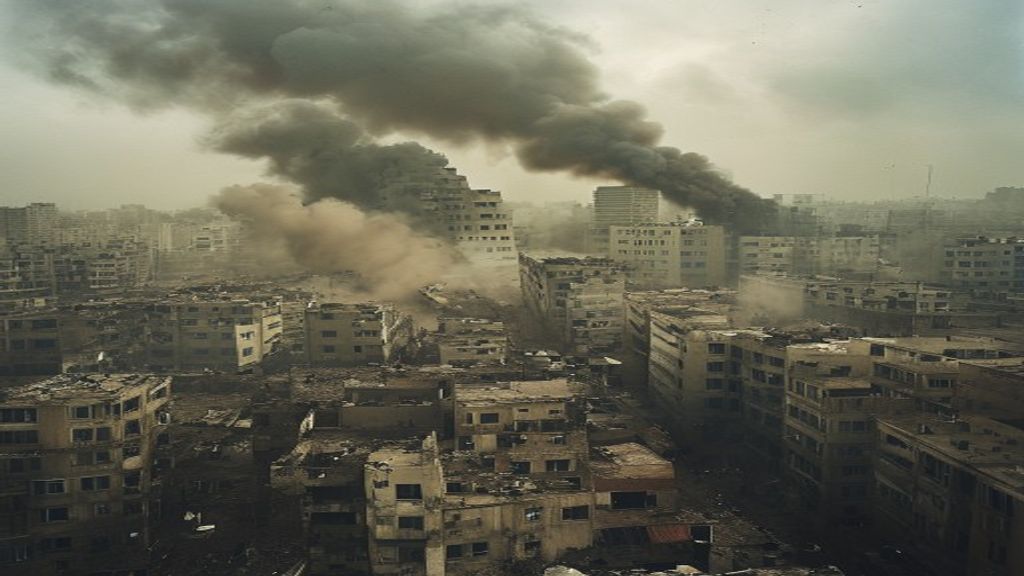
Israeli attacks and gunfire across Gaza killed at least six people on Thursday, according to Gaza’s Civil Defence agency and health officials, as violence persisted despite a United States-brokered ceasefire that has been in effect since October 2025. Two people were killed and several others injured when an Israeli drone struck central Gaza’s Nuseirat camp, Civil Defence spokesman Mahmud Bassal told the Palestinian news agency WAFA. Four others died in separate attacks across the Strip. The killings came just one day after Gaza’s Health Ministry said at least eight people had been killed over the preceding 24 hours, underscoring the fragility of an agreement that has failed to halt Israeli military operations inside the enclave.
The World Central Kitchen, one of the largest organizations delivering food aid to Palestinians in need, confirmed that one of its drivers was killed in an Israeli strike on a humanitarian vehicle near the Karem Abu Salem crossing on Wednesday. “Humanitarian aid deliveries should never be a target,” the group said in a statement, adding that it was in contact with the driver’s family and expected a full accounting from Israel. The driver was identified as Ahmad Nasser Saleem.
Ceasefire Fraying as Strikes Continue
Israel and Hamas agreed to a ceasefire on October 10, 2025, with fighting on the ground mostly halting in the months that followed. However, Israel has continued carrying out air strikes inside Gaza, killing at least 1,092 Palestinians and wounding more than 3,507 during the ceasefire period, data from Gaza’s Health Ministry showed. Sahar Ghanem, a director with the Health Ministry, told journalists in Gaza City that shortages of laboratory materials had reached 87 percent while essential diagnostic items were running at a 74-percent deficit. “Gaza’s laboratories and blood banks are on the verge of a complete shutdown,” Ghanem said, warning that diagnostic services across the war-battered enclave faced paralysis without urgent supplies.
Since October 2025, Israel has also expanded its control over the enclave beyond the demarcation line established by the truce agreement, known as the Yellow Line, according to Gaza’s Government Media Office. Last week, the office said Israeli forces now control approximately 80 percent of the Strip. A group of United Nations agencies and non-governmental organizations warned in a joint statement that the continued expansion of Israeli-controlled territory endangers civilians and severely restricts relief efforts. Dozens of Palestinian families have already been forced to evacuate from areas near the Yellow Line, the statement added.
Negotiations Stall Over Key Issues
Ceasefire talks remain deadlocked in Cairo, where Hamas chief negotiator Khalil al-Hayya arrived this week for another round of discussions aimed at advancing the second and more sensitive phase of the agreement. The first phase covered a temporary halt to fighting and the exchange of hostages for prisoners. Phase two is meant to address Hamas’s disarmament and the full withdrawal of Israeli military forces from Gaza — the most contentious issues separating the two sides.
Senior Hamas official Sami Abu Zuhri told Reuters that the ongoing Israeli strikes and territorial expansion were making negotiations increasingly difficult. “The continuation of attacks and the seizure of more land makes it impossible to speak of a genuine ceasefire,” Abu Zuhri said. An Israeli government spokesman said Israel remained committed to the framework agreed in October but would not accept any arrangement that left Hamas capable of rearming. Neither side has set a date for resuming formal negotiations, and mediators from Qatar and Egypt have yet to announce a new meeting schedule.
Humanitarian System Nearing Collapse
The strikes on Thursday hit areas of Gaza that were nominally covered by the ceasefire agreement. In Khan Younis, two people died when an Israeli drone fired on the courtyard of a home in the Batn as-Sameen area. Their bodies were recovered by paramedics and taken to Nasser Hospital, medical sources told the Anadolu news agency. Another strike killed one person and injured several others on a busy street in Gaza City, the sources added. Gaza’s hospitals confirmed receiving the bodies of six people from Thursday’s attacks.
The cumulative toll since October 2023, when Israel’s major military offensive on Gaza began, has reached more than 73,118 Palestinians killed, according to the Health Ministry. The ministry’s figures, which include combatants and civilians, have been cited by United Nations agencies and international humanitarian organizations throughout the conflict. The ceasefire agreement was brokered by the United States with backing from Qatar and Egypt, and President Donald Trump has publicly urged both sides to honour the terms. However, senior administration officials have acknowledged privately that enforcing compliance has proved difficult, according to a report in The Washington Post, which cited three people familiar with the discussions who spoke on condition of anonymity to describe closed-door deliberations.
World Central Kitchen’s statement on the driver’s death underscored the growing danger facing aid workers in Gaza. “This is yet another example of the risks faced by humanitarian personnel operating in conflict zones where the rules of engagement are not being respected,” the organization said. It called for an independent investigation into the strike and reiterated its demand that all parties guarantee the safety of relief workers. Israel said it was reviewing the incident.
What comes next will depend heavily on whether mediators can broker a new round of talks and whether both sides show willingness to implement phase two of the agreement. International pressure is mounting, with the United Nations Secretary-General calling on all parties this week to prioritise civilian protection and respect for international humanitarian law.