Guatemala Signs Historic Counter-Narcotics Pact With US as Cartel Violence Reaches New High
Guatemala has signed a landmark bilateral agreement with the United States that grants American agents authority to conduct counter-narcotics operations on Guatemalan soil, marking a dramatic shift in the Central American nation's approach to organized crime and sovereignty.
Guatemala has signed a landmark bilateral agreement with the United States that grants American agents authority to conduct counter-narcotics operations on Guatemalan soil, marking a dramatic shift in the Central American nation’s approach to organized crime and sovereignty.
Joint Operations and Shared Intelligence
The agreement, signed Thursday in Guatemala City by Guatemalan Defense Minister General Julio Guillermo Rivera and US Secretary of State Marco Rubio, establishes a framework for joint operations, shared intelligence, and the stationing of US anti-narcotics agents in key strategic positions across Guatemala’s territory.
Under the pact, US Drug Enforcement Administration operatives will work alongside Guatemalan forces to target cocaine trafficking corridors that flow northward from Colombia and Peru through Guatemala toward the US border. The agreement also creates a joint task force with real-time intelligence sharing and authority for cross-border hot pursuit.
“This is about dismantling the networks that have turned Guatemala into a highway for drugs flowing into American communities,” Rubio said at the signing ceremony. “We are committing resources, personnel, and technology to help Guatemala take back its territory from the cartels.”
Critics Warn of Sovereignty Risks and Mission Creep
The agreement has ignited fierce backlash from human rights organizations, legal experts, and opposition politicians who argue the deal hands over Guatemalan sovereignty to foreign operatives with little accountability or oversight.
“What we are witnessing is the legalisation of a foreign military presence on Guatemalan territory without congressional approval,” said Ana Garcia, director of the Guatemala Human Rights Commission. “History shows us what happens when US security operations operate with impunity in our region — extrajudicial killings, disappeared activists, and destabilised governments.”
Guatemala’s Constitutional Court has issued an emergency injunction pausing certain provisions of the agreement pending a full judicial review, setting up a constitutional showdown that could reach the country’s highest court within weeks.
Record Violence Driving Public Support for Strong Action
The timing of the agreement reflects the escalating urgency of the security crisis gripping Guatemala and its neighbours. Homicide rates in Guatemala City have surged 34 percent in the past year, with the Mexican-aligned Sinaloa and Jalisco cartels now controlling major trafficking routes through the eastern highlands and Pacific coast.
President Bernardo Arevalo, whose anti-corruption platform swept him to power, has defended the agreement as a temporary emergency measure. “We cannot win this fight with the resources we currently have,” he said in a televised address. “This agreement has strict sunset provisions and a review clause after 18 months. We are not surrendering our sovereignty — we are borrowing capacity to survive the immediate crisis.”
Regional analysts are watching closely. Mexican officials have expressed concern that pushing cartel operations southward could destabilise the entire northern Central American corridor, a fear reinforced by evidence that already stretched Guatemalan security forces are outgunned and outmatched by heavily armed cartel cells operating with apparent impunity in rural provinces.
The agreement now moves to Guatemala’s Congress for ratification, where Arevalo’s party holds a slim majority and faces a bloc of opposition legislators who have vowed to block its passage.
The deal represents a significant gamble for Arevalo, who rose to power on a platform that condemned US intervention in Latin America and promised to investigate corrupt ties between Guatemalan oligarchs and security forces. His administration’s willingness to invite American operatives onto Guatemalan soil has left many of his former supporters feeling betrayed.
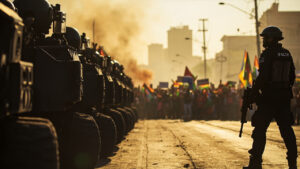
“The president who promised us sovereignty has delivered us a foreign occupation by another name,” said Rodrigo Villareal, a former Arevalo campaign staffer now affiliated with the Civic Opposition Coalition. “We will fight this in the streets, in the courts, and in Congress.”
The agreement also faces scepticism from neighbouring El Salvador and Honduras, where similar US-backed security programmes have produced mixed results. El Salvador’s controversial mano dura policies, which involved mass arrests and militarised policing, reduced homicide rates but drew widespread condemnation for human rights abuses against civilian populations.
Whether the pact survives constitutional scrutiny or unravels under public pressure, one thing is already clear: Guatemala has become the latest flashpoint in a broader regional reckoning over how Latin American nations choose to confront organised crime — and at what cost to their own sovereignty.